
Soil Toil
According to the history books, the idea of improving soil for better harvests, was the norm. Egyptians, Romans and Babylonian societies all record the addition of materials to soils to improve harvests - such as minerals, wood ash and manures – including human waste. The Egyptians used to rely on the rich alluvial deposits from the annual Nile floods to irrigate and fertilise their fields lying alongside the great river. Modern archaeological forensic analysis has pushed the use of manure back at least 8,000 years and it is probable that this practice goes back much further, to the earliest days of known settled communities – currently around 10,000BCE. So soil toil is nothing new!

The book, Ten Acres Enough, details farming practices 150 years ago in East Coast USA – small-scale and similar in many ways to what we now call ‘Permaculture’
In his small book, ‘Ten Acres Enough’, first published in 1864, Edmund Morris devotes several sections to soil improvement through the use of manures – particularly home-made liquid manures. Being new to small-holding and eager to learn, he meticulously records the best practices of his neighbours in an effort to scientifically establish which methods produced the best crops. He compares the differences in fruit and veg size and also the quantity produced, from soils manured in different ways.
Here is a quote from the book: ‘The portion thus supplied (with liquid manure) was certainly three times as productive as the portion not supplied’.
The author was referring to soft fruit harvesting. He was a ‘details’ man. If only he had had access to modern phone camera technology – we would probably now have a wonderful, meticulously recorded visual record of his experiments. But even without photos, the book is a great read and full of useful info – the key message being to keep the ground in good condition.
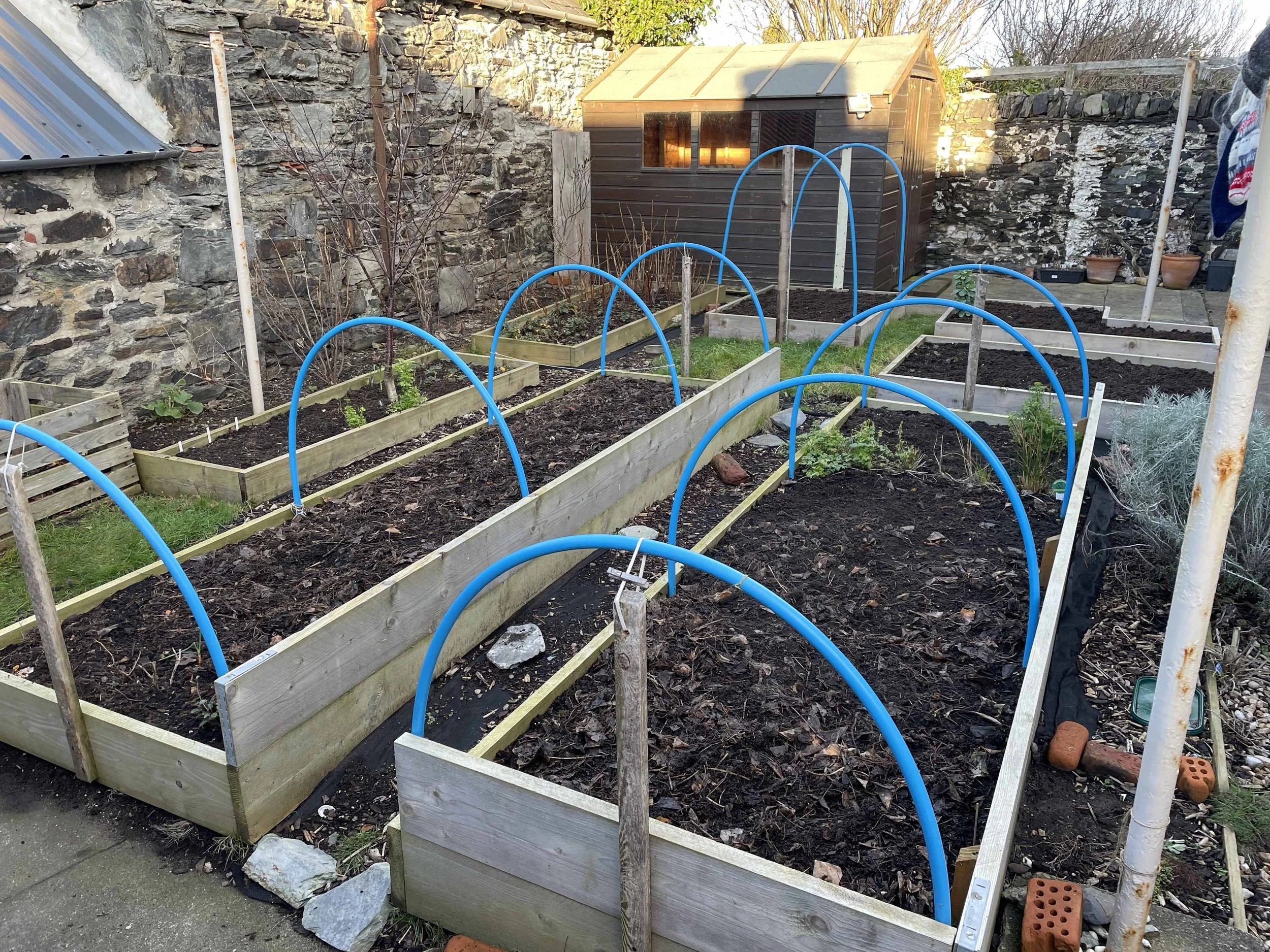
My own small back garden (previously a lawn) is now a collection of easily-managed raised beds. They have recently been top-dressed with a layer of leaf-mould. This was only partially decayed and will continue to breakdown into the beds over the next 2 months or so
In my own garden in north Aberdeenshire, I recently cleared the raised beds. They were created from scratch over the last 3 years using the ‘no-dig’ method. I simply laid the raised bed wooden frames made from ‘second quality’ scaffold boards, on top of the existing lawn and added a layer of plain cardboard within the frames to supress the grass, dandelions, clover, thistles etc. I then filled the frames with a mixture of well-rotted farmyard manure, compost and some topsoil too. This was mainly bought in bulk, online. The fresh mixture was initially nutritious and our first year’s crops were bountiful. We had more courgettes than we could eat; enough potatoes for our own use for many months; a bumper crop of broad beans; plenty of onions, shallots, garlic and chives. We grew a variety of salad crops, including spinach and different lettuce types that kept us fed for almost the whole first year. We also grew a range of herbs - some in the raised beds and others in separate containers. The harvest from such a small space was amazing!
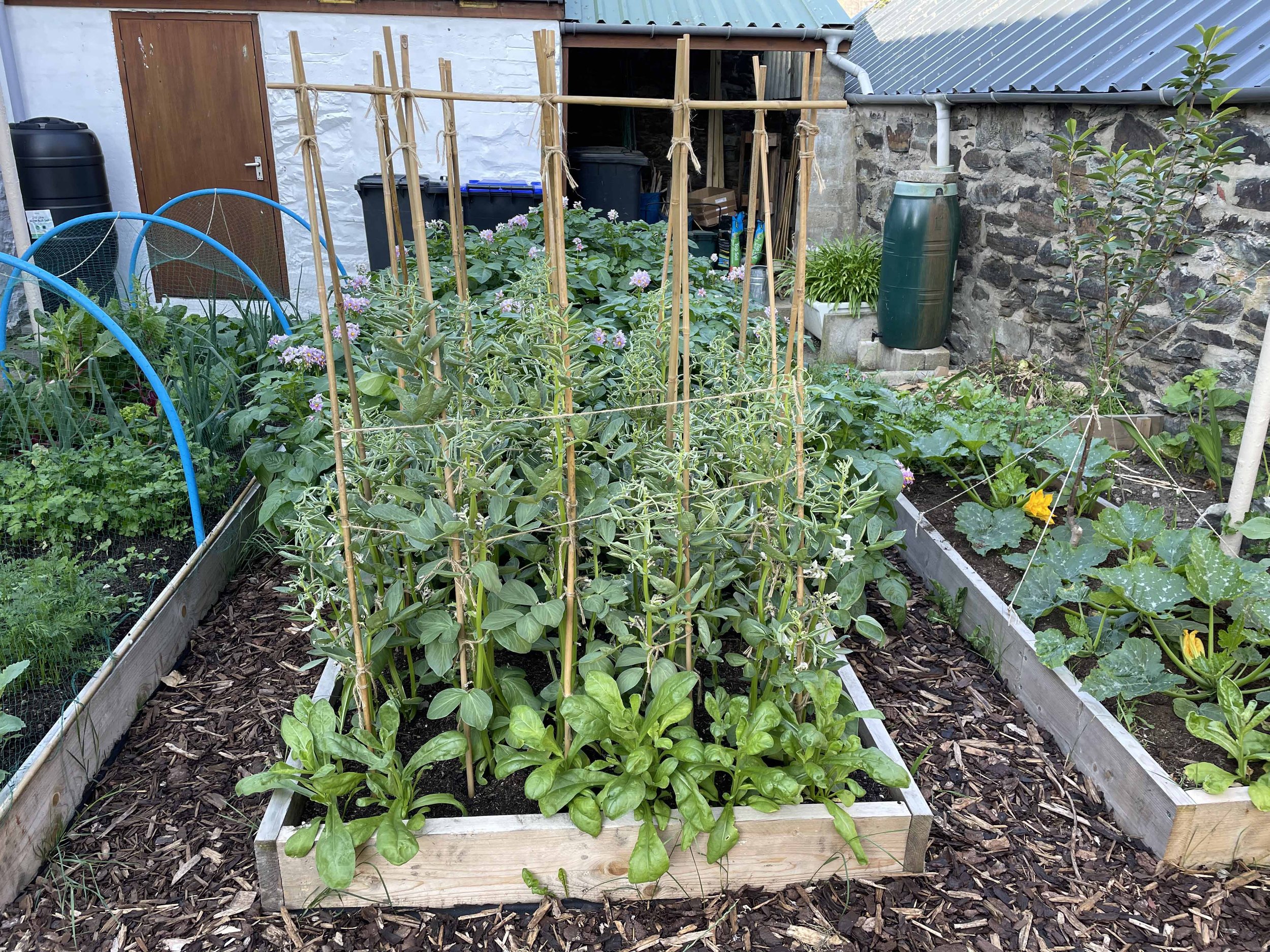
Broad beans are favourite crop. The plants had to be sprayed using soapy water due to blackfly but otherwise they were trouble-free. Potatoes can be seen behind the beans; courgettes to the right side and various salad plants and spinach to the left side.
Although practising crop rotation, the second year’s crops were noticeably smaller as I had neglected to properly feed the soils over the winter months or add a winter mulch to improve soil structure and moisture retention. In early springtime this year (2025) I added 3 new raised beds, filling each one with a fresh mixture of compost and topsoil, much as I did first time round. They produced a healthy crop of brassicas and potatoes. But from the original 3 beds, the crops were smaller still – reflecting exactly Edmund Morris’s findings. Onions were about half the usual size; courgettes were tiny and the potato harvest was smaller than expected. In addition, we were hit by a long drought during the summer months and this particularly highlighted the issue of the poor soil structure I had inadvertently created. During the drought, the raised beds dried out when they were left for a month and became almost impossible to re-moisturise even with nightly hosing! This was also partly due to the disconnect between the original lawn / soil and the new raised-bed fill. So, my focus this winter has been restoring the beds to full health in preparation for planting in 2026.
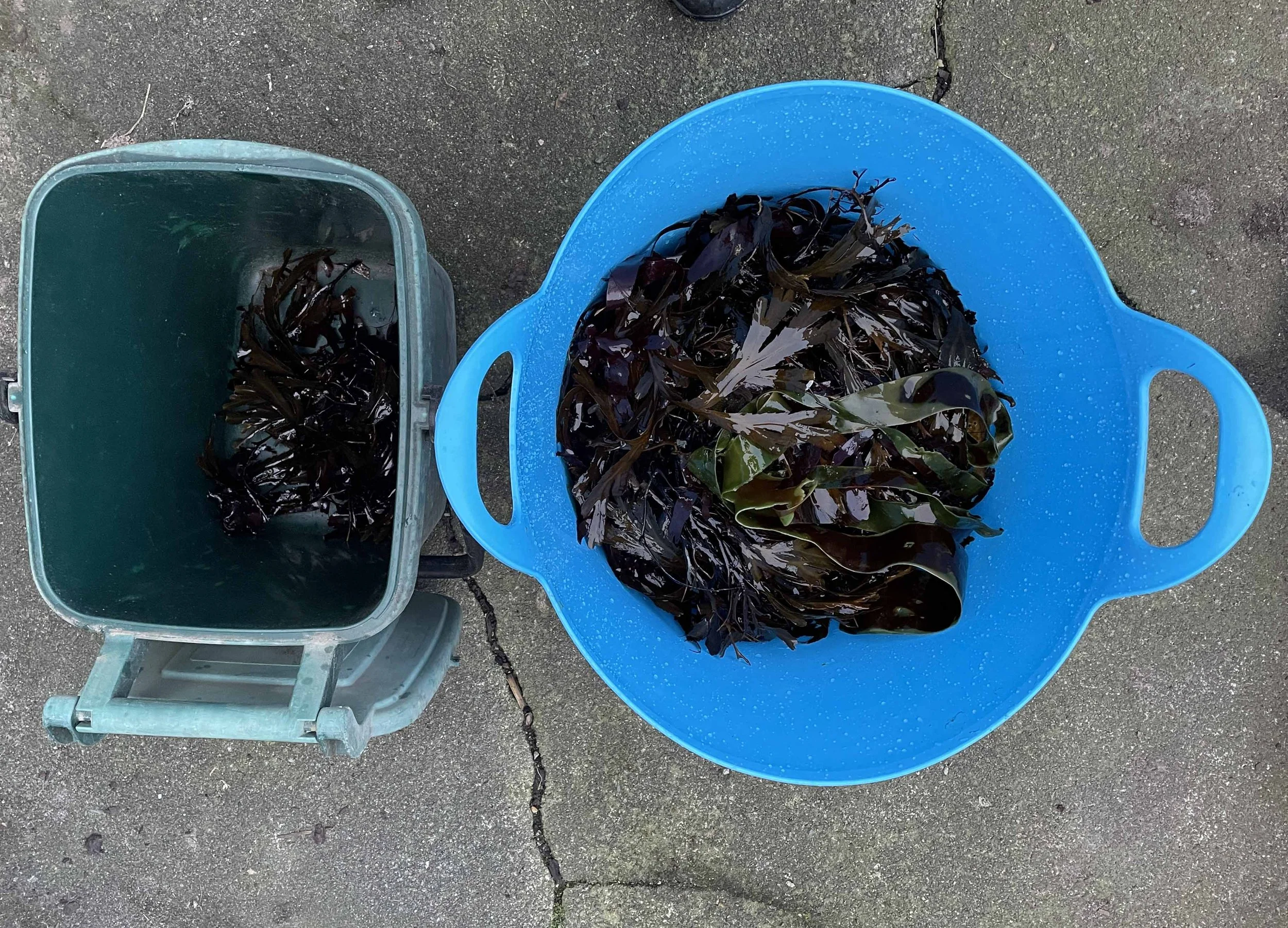
Seaweed soup which will produce a rich liquid fertiliser in a month or two, to be used on the veg beds in the growing season to come in 2026. The seaweed was washed to remove salt before being chopped and added to the soup
Sticking with no-dig gardening principles, over the past month I have been sprinkling surface layers of fertilizer (chicken pellets) and minerals (rock dust). After each application the beds have been left for a few days for the now-abundant rain to help soil absorption. I am assisting this process with a light surface rake, also removing new unwanted seedlings. Nasturtiums, Marigold and Verbascum seedlings, growing from last year’s seeds, are popping up everywhere due to our mild winters! My collected leaves were beginning to decompose but rather than leave them to complete this process in their own heap, I have now spread the decaying mixture across the beds, providing a winter mulch which will rot down insitu. It was interesting to see how many worms there were at the bottom of the leaf compost. I tried to be super-careful to avoid hurting them, moving the lowest layers by hand. Hopefully many of them will have survived the trauma of being relocated and will take to their new raised-bed homes. Altogether, the above changes should improve the soil fertility, its structure and the mycorrhizal fungi content, as well as improving soil biodiversity.
Here’s hoping my soil toil will lead to bumper harvests this year. I’ll report back in future blogs!
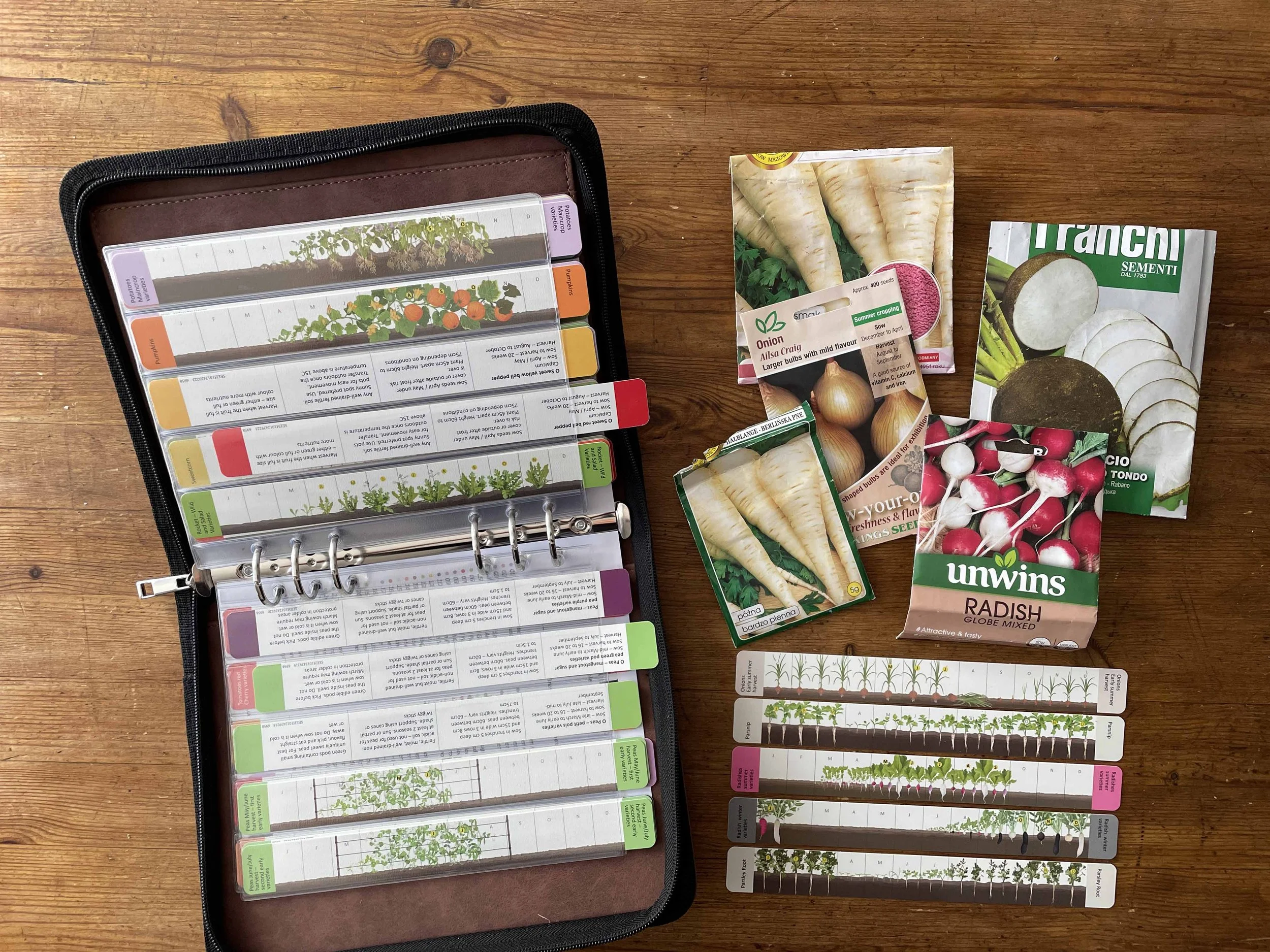
SeeHow – Veg can help you plan your garden for a year-round supply of fantastic healthy homegrown veg!
Why not enjoy the quiet winter months exploring planting and harvesting ideas. It is great to grow what you like eating but it is also fun to explore more unusual veg options – check out @franchi for some fantastic varieties. SeeHow- Veg is a great planning tool that can help with this. It works by using illustrations that show how and when each veg grows (so no experience necessary to achieve great results!) Useful technical information is provided on the back of each illustration. Follow what is written on the back to enjoy eating what is shown on the front!
Happy Gardening and Harvesting in 2026 from SeeHow.
The above Text and all Photographs are copyright of Wincenty (Wicek) Sosna. Please contact SeeHow (07939 226417) for permission to reproduce in any way, in part or as the complete text.
Wicek, now semi-retired, is a multi-award-winning architect. He is also a writer, horticulturalist and keen gardener. He lives in Macduff on the dramatic north Aberdeenshire coast. Wicek invented the unique interactive SeeHow gardening book concept, to actually show gardeners how plants and veg grow throughout the calendar-year. Because SeeHow books work visually, anyone can use them - from school children to garden design professionals. Pictures really are worth 1,000 words!
Exciting Opportunity!
SeeHow is looking for investors / crowdfunders to help it grow – specifically to develop the SeeHow App.
Please spread the word to friends and colleagues you think may be interested. For anyone who would like to know more about becoming part of the SeeHow adventure, please contact Wicek Sosna on +44 (0) 7939 226417