
A Shout-Out for Flowering Shrubs
Thought I’d write a short ‘shout-out’ for flowering shrubs. There are a few shrub flowering guides already included in SeeHow’s collection of flowering plants, but not nearly enough! (more are planned - any suggestions welcome). There are many shrubs that produce wonderful colourful displays at this time of year. They lift our eyes upwards from the borders and beds, to the canopy above. For a short time they can hold pride-of-place in our gardens, with big bold blooms or cascades of flower. Some are deliciously fragrant too, like the deciduous Philadelphus pubescens, more commonly known as a ‘Mock Orange’ in the UK (in full flower as I write in early June). If you have a large enough garden, just let it grow and it will reward you with weeks of delicate white aromatic flowers.
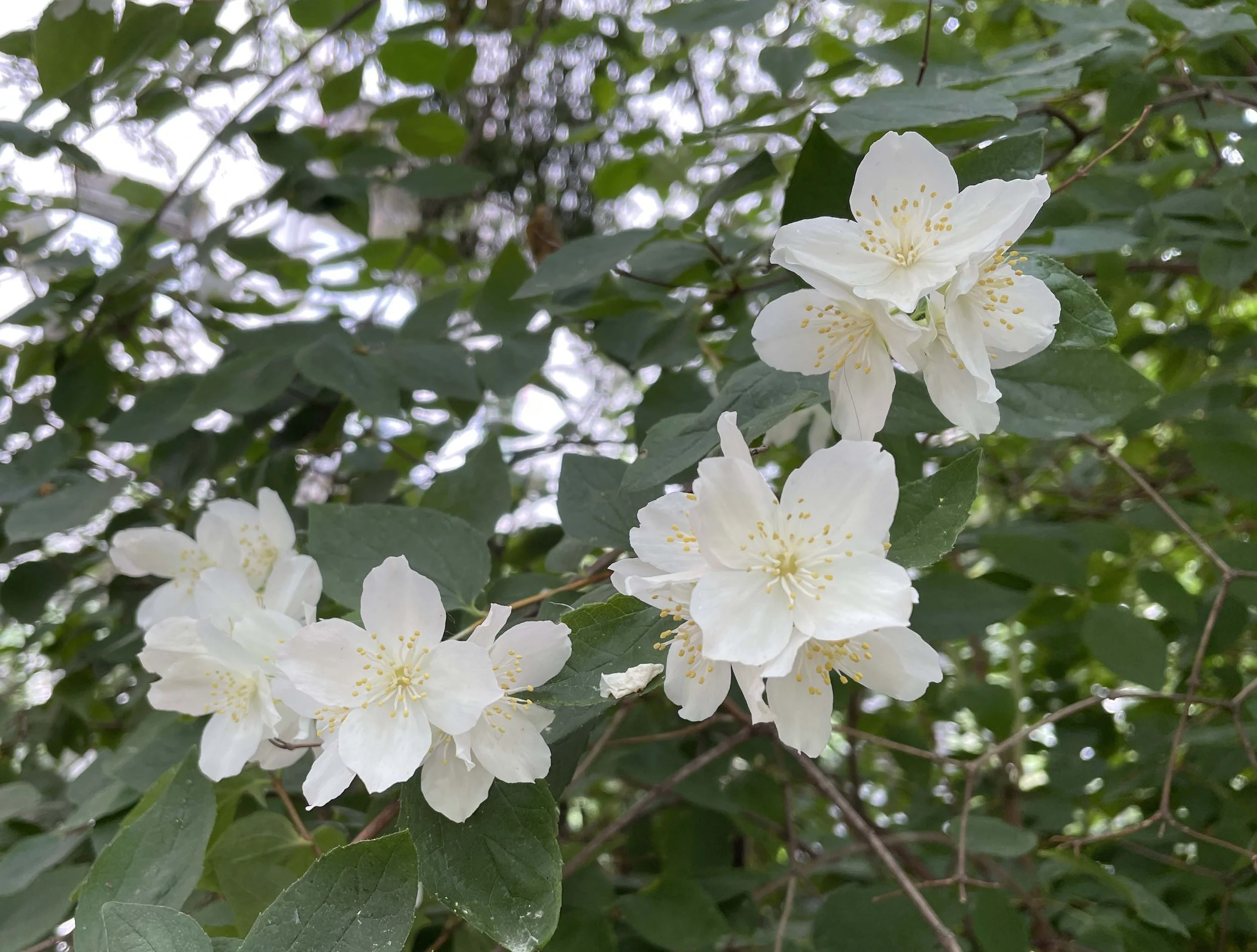
Philadelphus pubescens - a wonderfully aromatic deciduous flowering shrub growing to around 4m
We are all familiar with the common Lilac, varieties of which will grow to 4m or more if allowed. They are often planted as one-off specimens around garden edges. But there are dwarf varieties too, typically growing 70cm to 120cm in height, with all the usual varieties of lilac colours. They have a more compact form and are fragrant like their taller cousins, making them perfect for small garden borders.
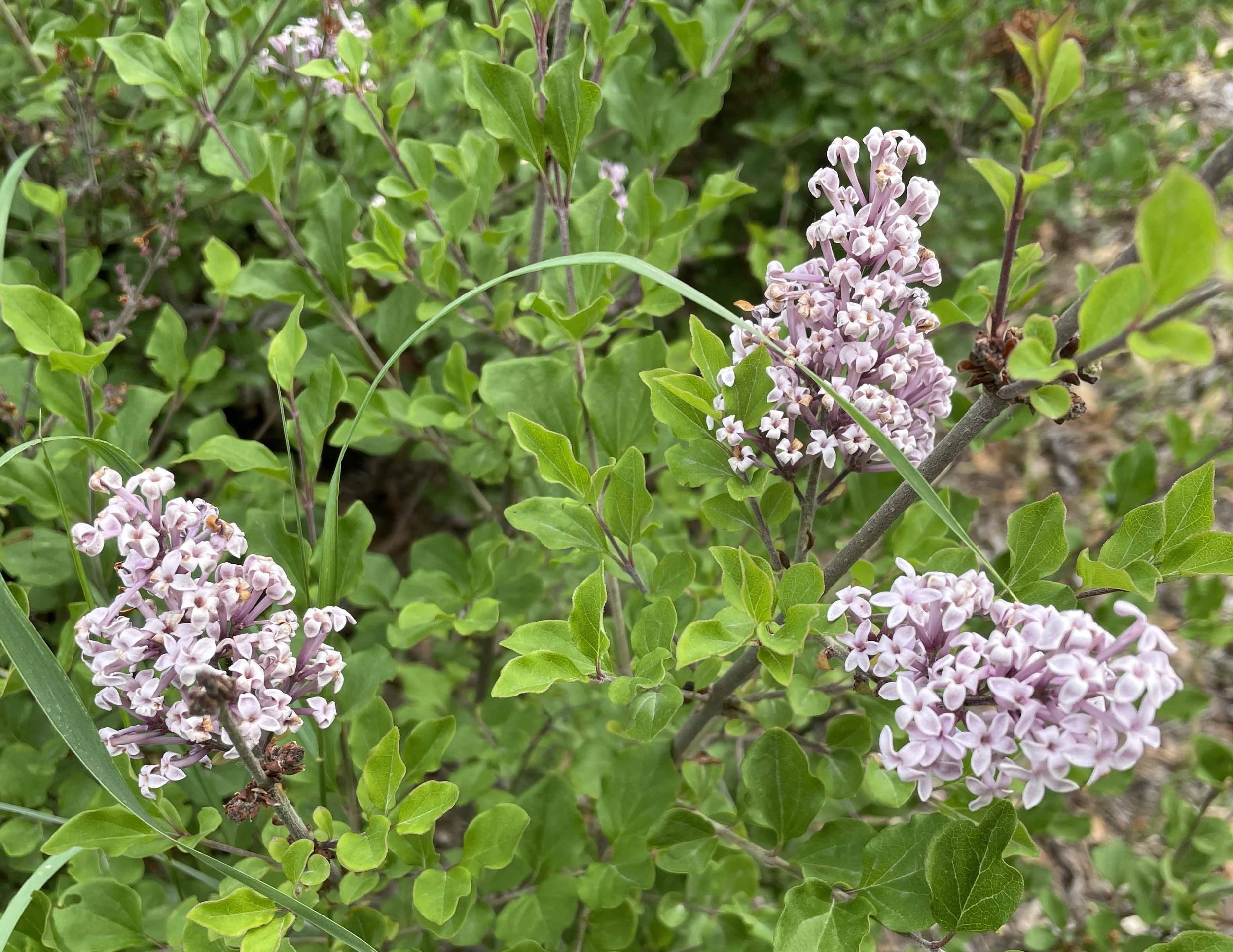
There are a wide variety of dwarf Syringa plants from which to choose, with the typical lilac scented flower clusters.
Another shrub that caught my eye this year was Spiraea, smothered in clusters of small white flowers, as if caught in an unexpected snowstorm! It works as a specimen, but really comes into its own when planted as loose hedging or in groups of three – where space permits. It copes well with urban environments.
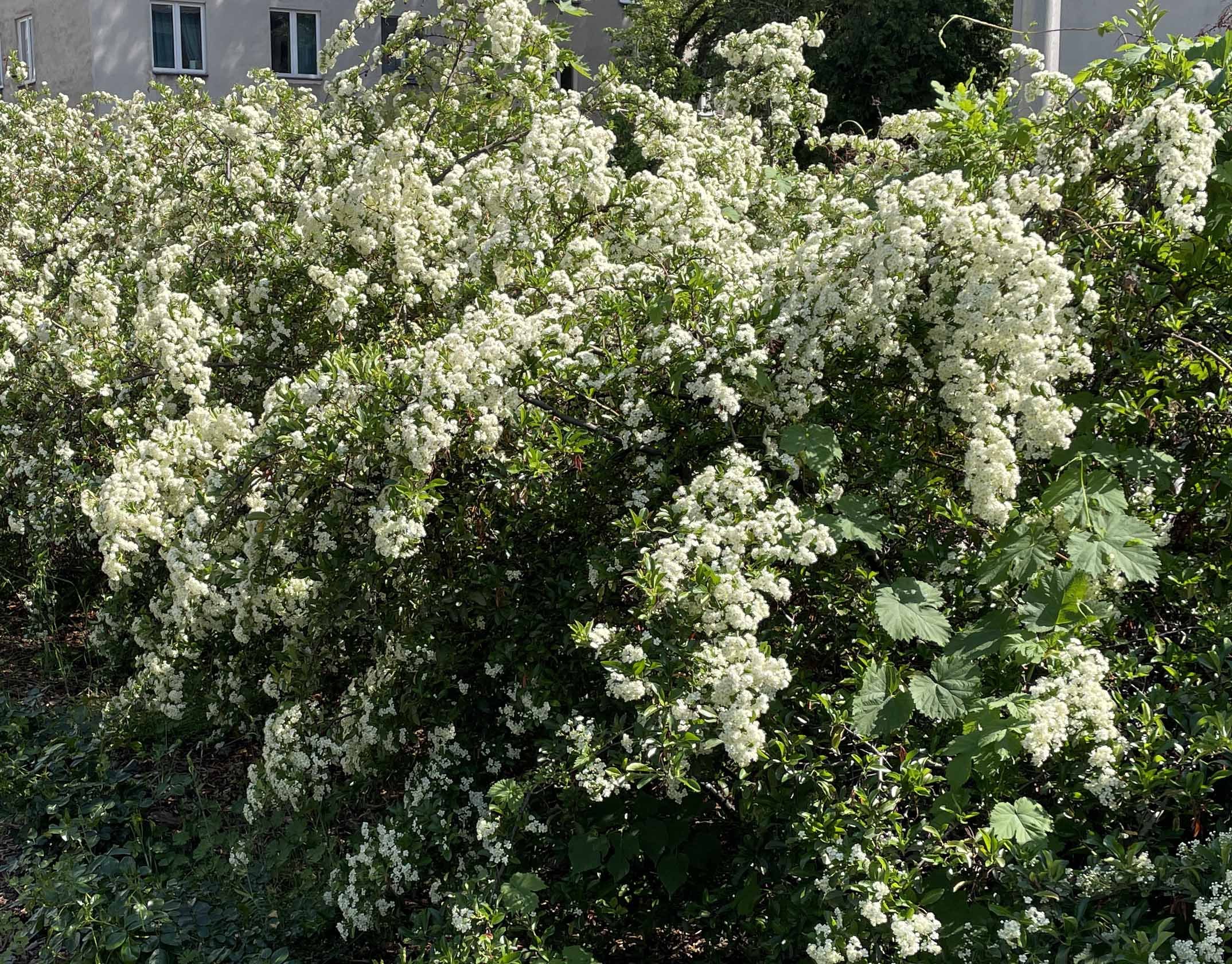
Spiraea chamaedryfolia - a deciduous shrub growing to about 1.5m in height and spread
A less-common flowering plant is the climbing Hydrangea petiolaris. This can grow to 15m in height! It becomes covered in clusters of white lacecap flower blooms 20cm across in late spring and early summer. The blooms mix infertile showy flowers surrounding the tiny fertile clusters. I’ve seen it covering pergolas, old masonry walls, even the whole sides of buildings and also climbing the trunks of taller trees. In this way, it doesn’t take much space at ground level, while extending the flower border vertically, creating a striking visual impact.
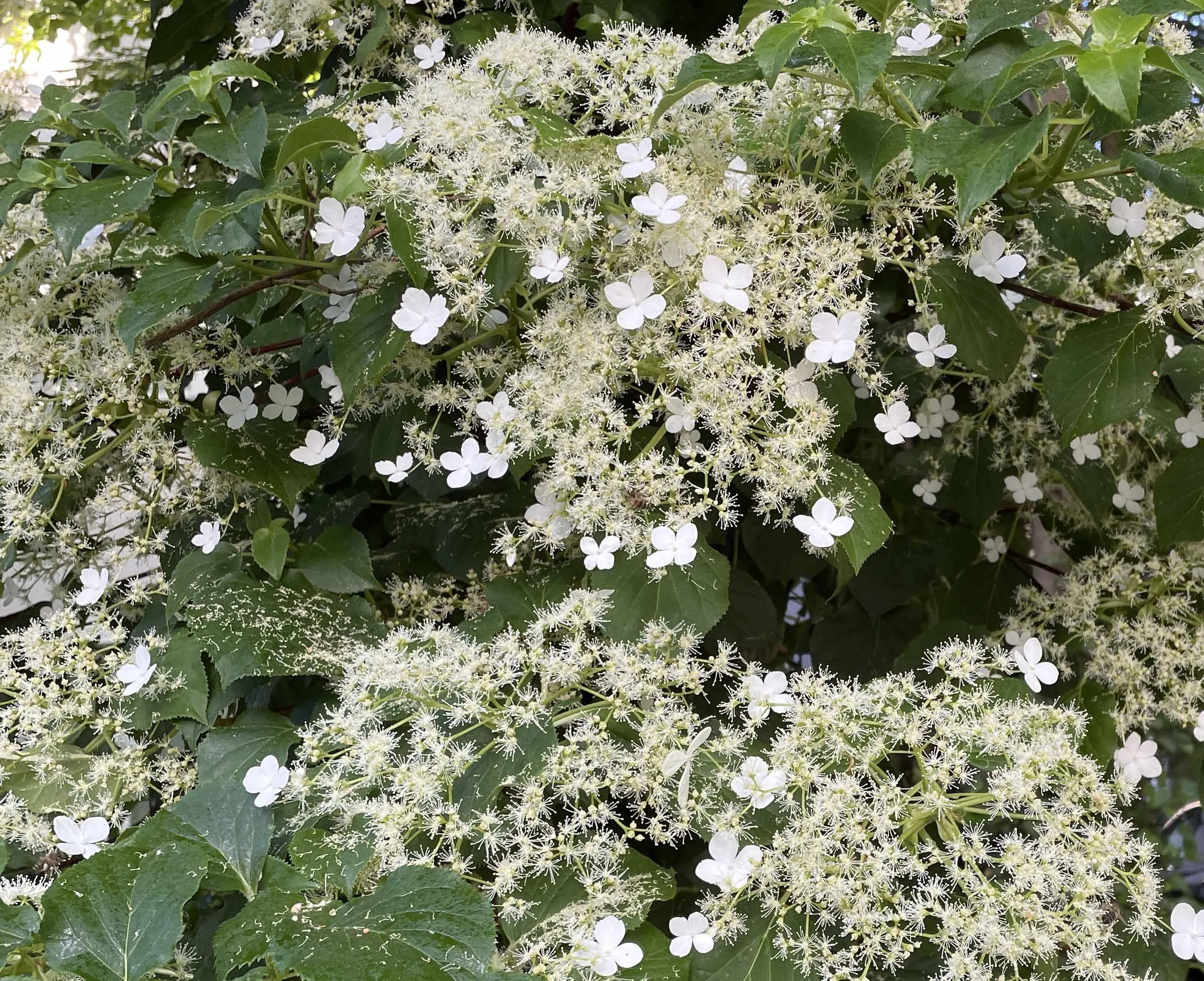
Hydrangea petiolaris is a decideous self-clinging climber that can grow to 15m in height and 6m in width
May / June is also the time of Rhododendrons. Is there any shrub that produces more beautiful, showy flowers? It is easy to see why they were such a success when the plant hunters began to bring them to the UK in the C18th. They do look exotic. Some varieties become very large and provided superb splashes of colour in the landscape when covered by their sumptuous blooms. Wealthy landowners could not get enough of them and in relatively few years they were growing up and down the land. Alas, no one at the time considered the issue of ‘invasive species’. But some rhododendrons are invasive – especially Rhododendron ponticum. It is not illegal to grow the plant in your garden but it is probably best not to. There are many other species to choose from.
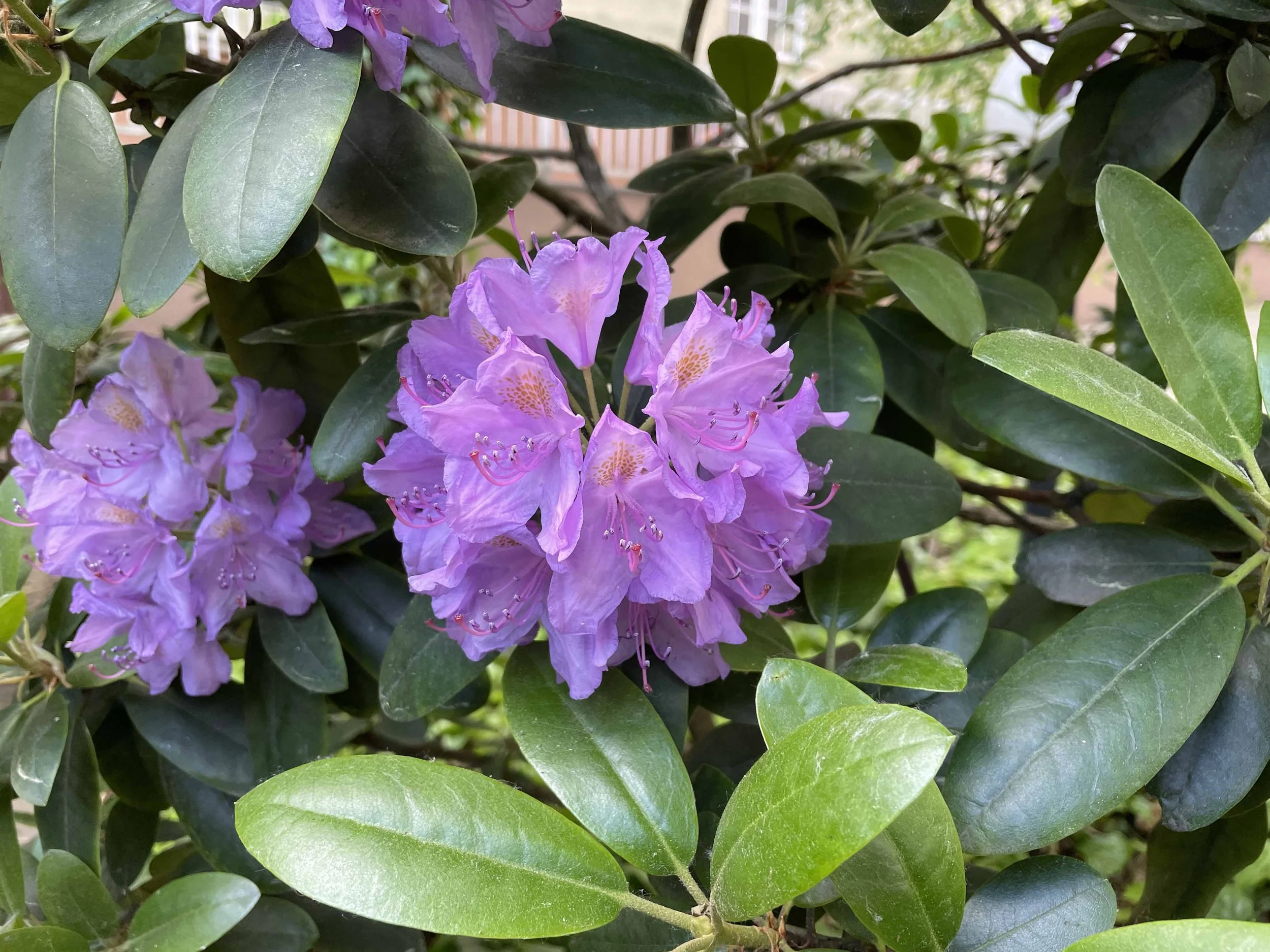
Rhododendron ponticum – has beautiful large blousy colourful flowers. If planting, it should be carefully kept in check. Its dense evergreen foliage has a tendency to overshade the ground below, preventing understorey planting and according to research, does not support the normal biodiversity range and can negatively affect the biology of the soil.
Rhododendron simsii is an Azalea (a sub-species of rhododendron). Azaleas require acidic soil to grow well. They tend to bloom a bit later than rhododendrons. They are smaller and more compact and can be grown in large containers which can be specifically filled with ericaceous compost. In this way they can brighten up a terrace or balcony. Some varieties can be very fragrant.
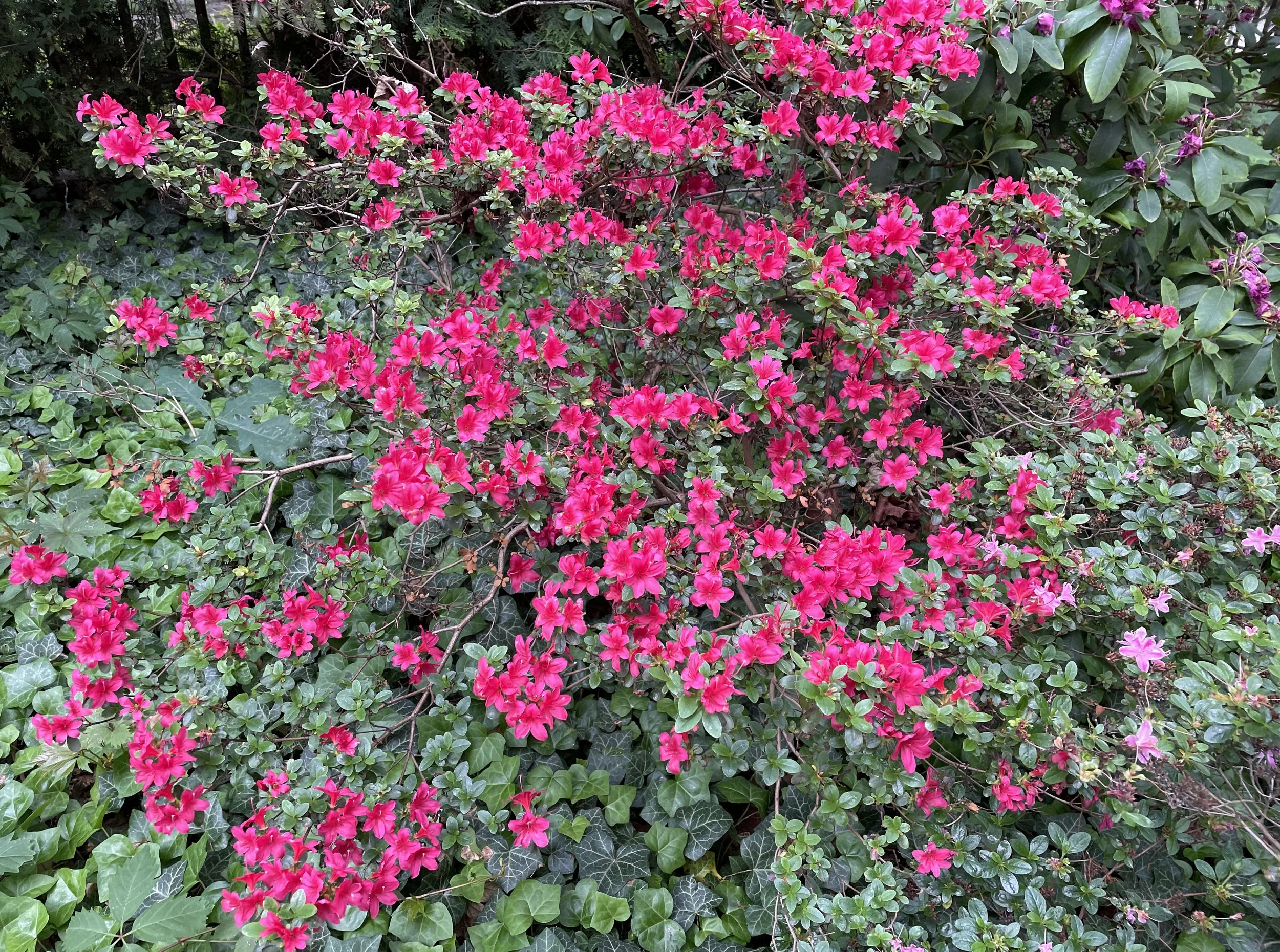
Rhododendron simsii - also know as an Indian Azalea, from Asia. Evergreen. A more compact plant suitable for smaller gardens and containers too, growing to about 1.2m. Comes in a wide range of colours. Acidic soil.
Rhododendrons come in strong colours. Here are two more to wet the appetite, suitable for the smaller garden or perhaps a large container.
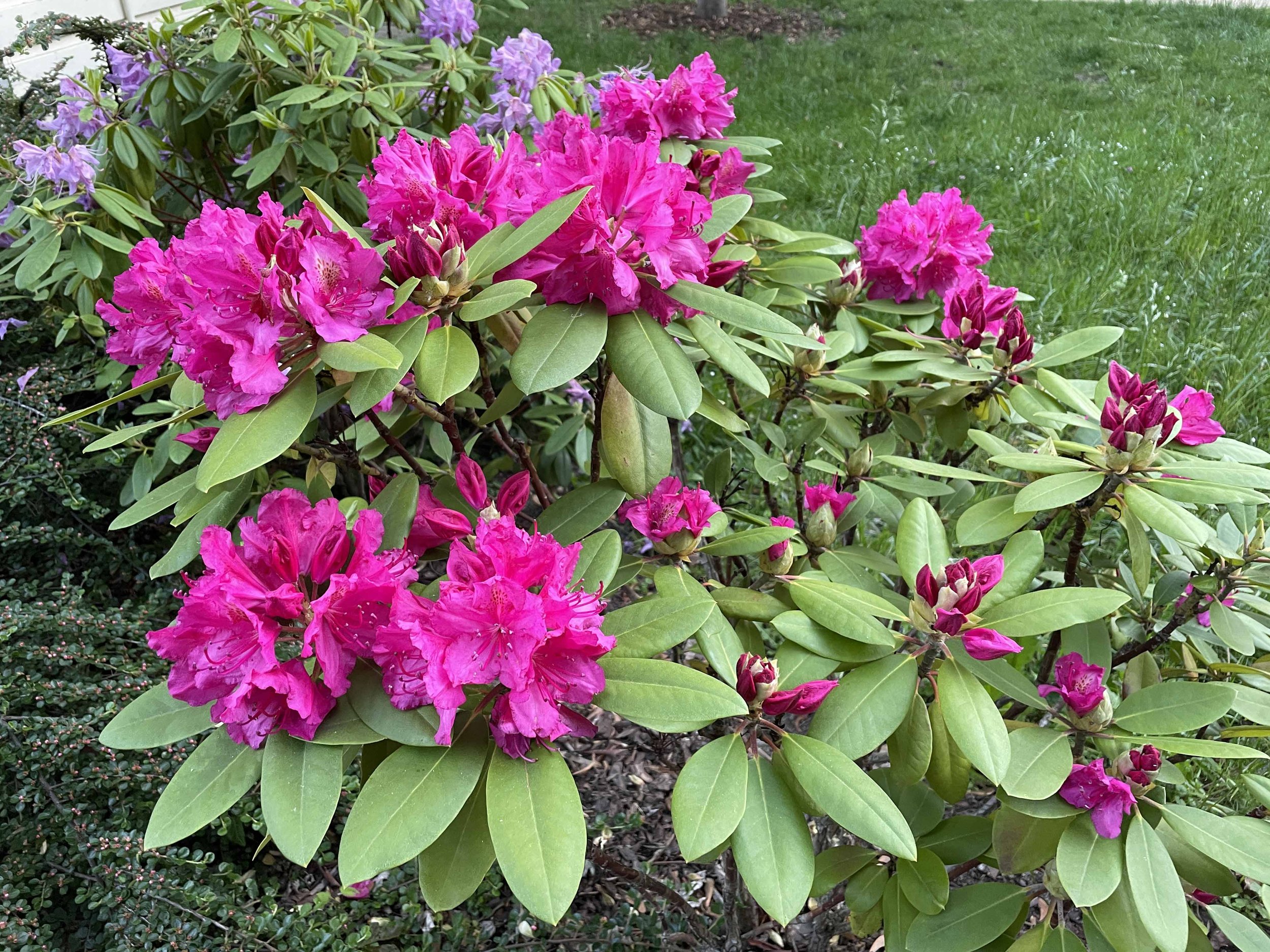
Rhododendron catawbiense - evergreen from Eastern USA, growing to 4m x 4m if left unchecked. Biodiversity friendly. Acidic soils
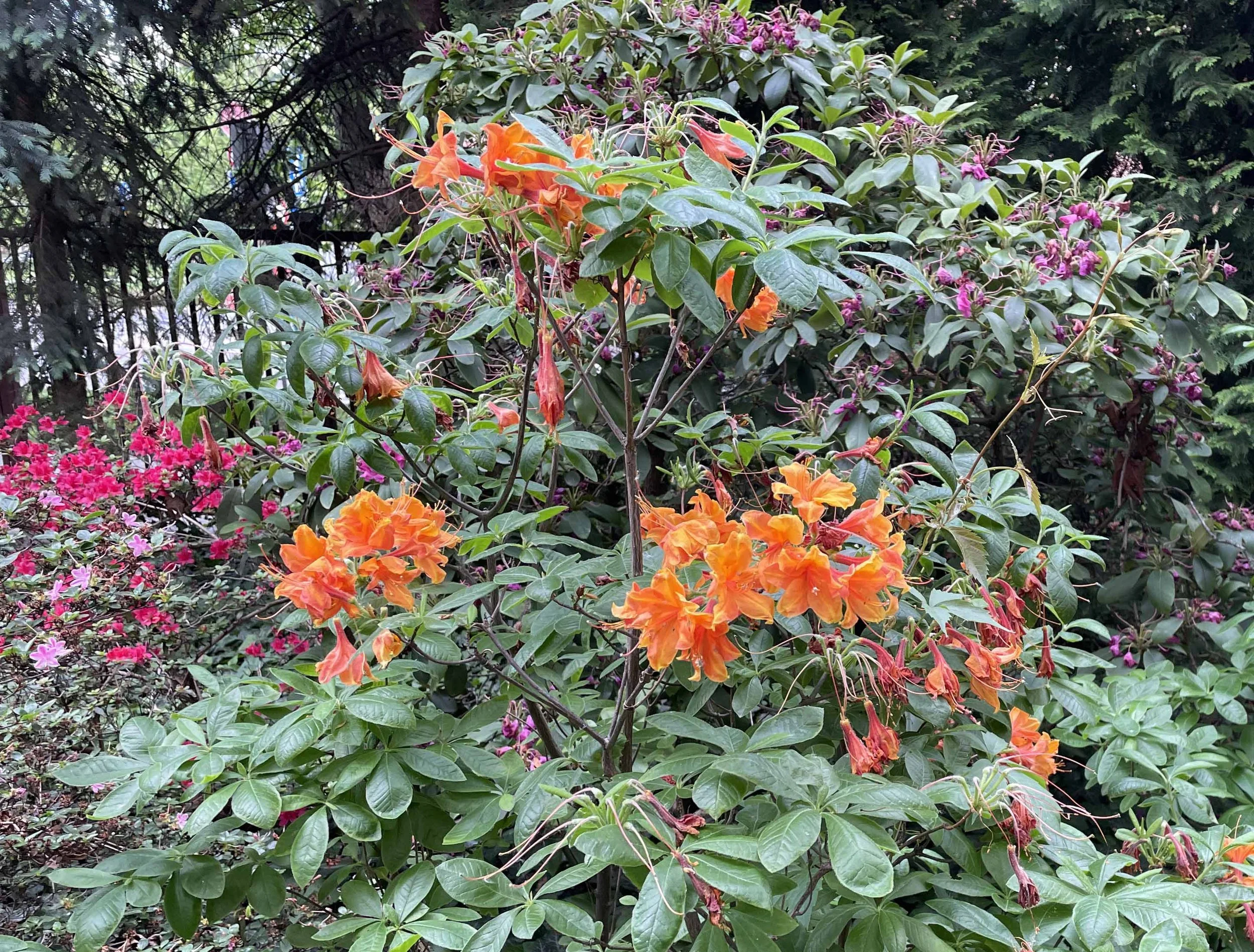
Rhododendron calendulaceum (according to the online plant identifier Pl@ntNet) - deciduous, from eastern USA, growing up to 4.5m, so needs to be kept in check in small gardens / planted in a large container. Biodiversity friendly. Acidic soils
Some flowering shrubs can take up a lot of garden space so may not be for everyone. However, they are a favourite in many local authority park gardens as well as open gardens surrounding country castles and stately homes, where they can often be enjoyed for nothing!
Happy gardening, from SeeHow
The above Photographs and Text are copyright of Wincenty (Wicek) Sosna. Please contact SeeHow (07939 226417) for permission to reproduce in any way, in part or as the complete text.
Wicek, now semi-retired, is a multi-award-winning architect. He is also a writer, horticulturalist and keen gardener. He lives in Macduff on the dramatic north Aberdeenshire coast. He invented the unique interactive SeeHow - Flower and Vegetable Growing Guides concept, which actually shows gardeners how plants and veg grow throughout the calendar-year. Because SeeHow Guides work visually, anyone can use them - from school children to garden design professionals. Pictures really are worth 1,000 words!
Exciting Opportunity!
SeeHow is looking for investors / crowdfunders to help it grow – specifically to develop the SeeHow App.
Please spread the word to friends and colleagues you think may be interested. For anyone who would like to know more about becoming part of the SeeHow adventure, please contact Wicek Sosna on +44 (0) 7939 226417