
Your Future-Self Will Thank You - Part 3
In my two recent ‘Future Selves’ blogs, I reflected briefly on the precarious nature of the global ‘just in time’ food supply chain. Sadly, this has been brought into sharp focus sooner than I expected by the war in the Middle East. As a consequence, the UK government has recently suggested citizens should prepare for possible food and commodity shortages in the coming months. While it is always worth keeping some extra tined food and other less-perishable goods ‘just-in-case’, thinking long-term, growing more of our own food may be another part of the solution … and it is not too late to start sowing! So this blog continues the ‘Future Selves’ theme, focussing on some healthy, easy-to-grow greens. There is lots more veg information, along with growing advice, to be found in SeeHow’s - Veg Growing Guides www.seehow.co.uk
1 Lettuce Options
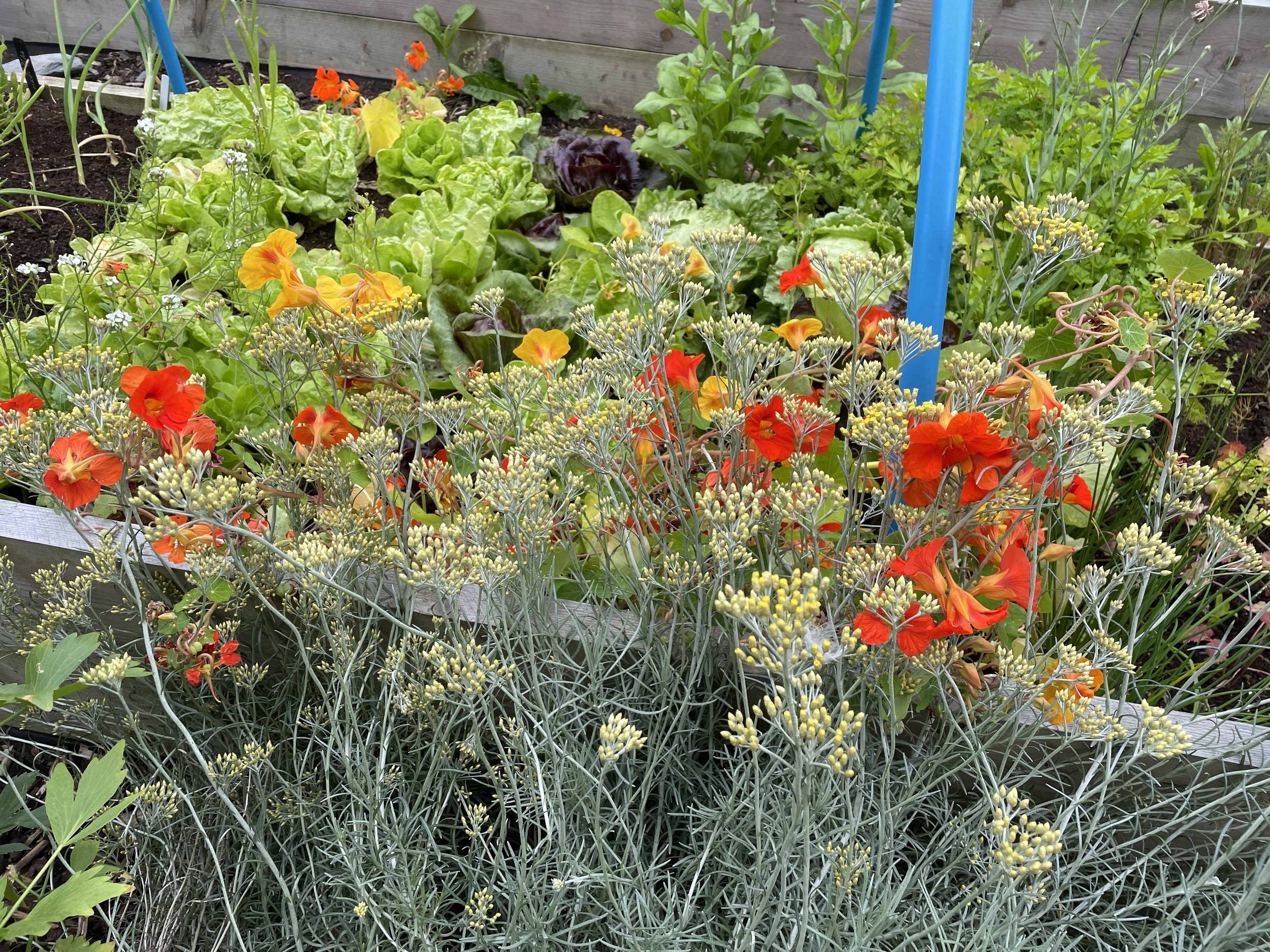
Photo showing a mixture of lettuces growing in one of our raised beds from 2025. Although it looks a bit chaotic, the lettuces were harvested almost daily, actually producing more than we could eat!
We know from supermarket shelves that lettuces come in many shapes and sizes and the good news is that they are full of nutrients and almost all of them can be easily grown at home, even in containers. Importantly, they should be sown where they will spend their lives as they don’t transplant well. There are many options to choose from - round crispy icebergs, little gem types, frisée varieties, spicy rocket and loose-leaf butterheads. Plant a few varieties every 4 to 6 weeks and you will be successionally cropping all year. Keep an eye out for slugs nestling between the leaves! For sowing details, check out SeeHow – Veg Growing Guides. www.seehow.co.uk/shop
Culinary tips – I like to eat freshly picked lettuce every day, normally as part of a healthy breakfast. Apart from washing, no preparation is required. Selecting a few different coloured leaves adds to a colourful salad bowl and mixing in some rocket adds extra flavour. Butterhead lettuce leaves can be torn into smaller pieces and mixed with a little Greek yogurt, seasoning to taste with a few drops of lemon juice, to make an excellent accompaniment to hot or cold meat dishes, fish dishes and cheeses.
2 Spinach Options
Spinach – Spinacia oleracea
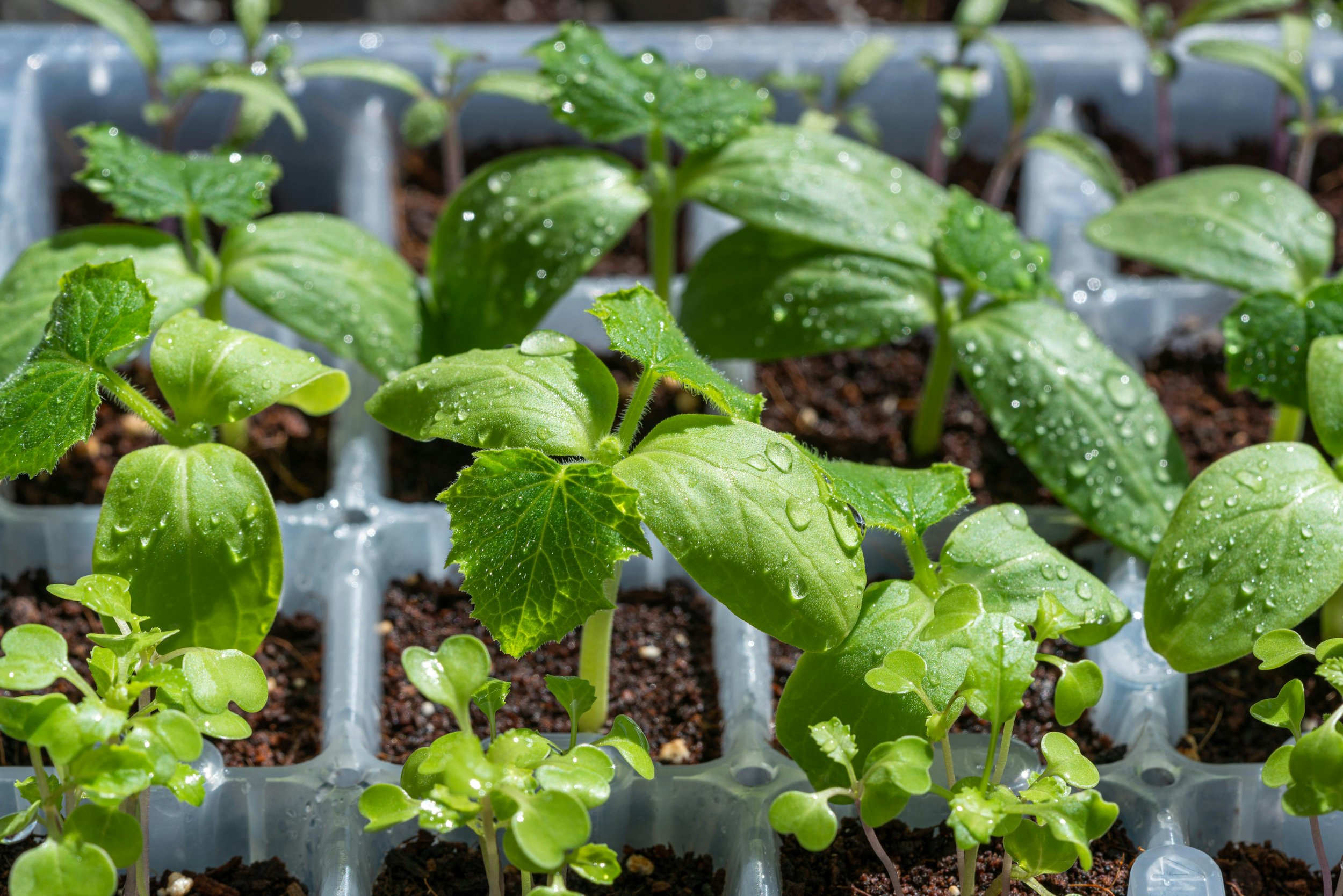
Open Source Photo Credit Franki-Frank - Spinach seedlings ready to be transplanted into the growing bed. They can also be sown directly into veg beds once the weather warms sufficiently.
Perpetual Spinach - Beta vulgaris subsp
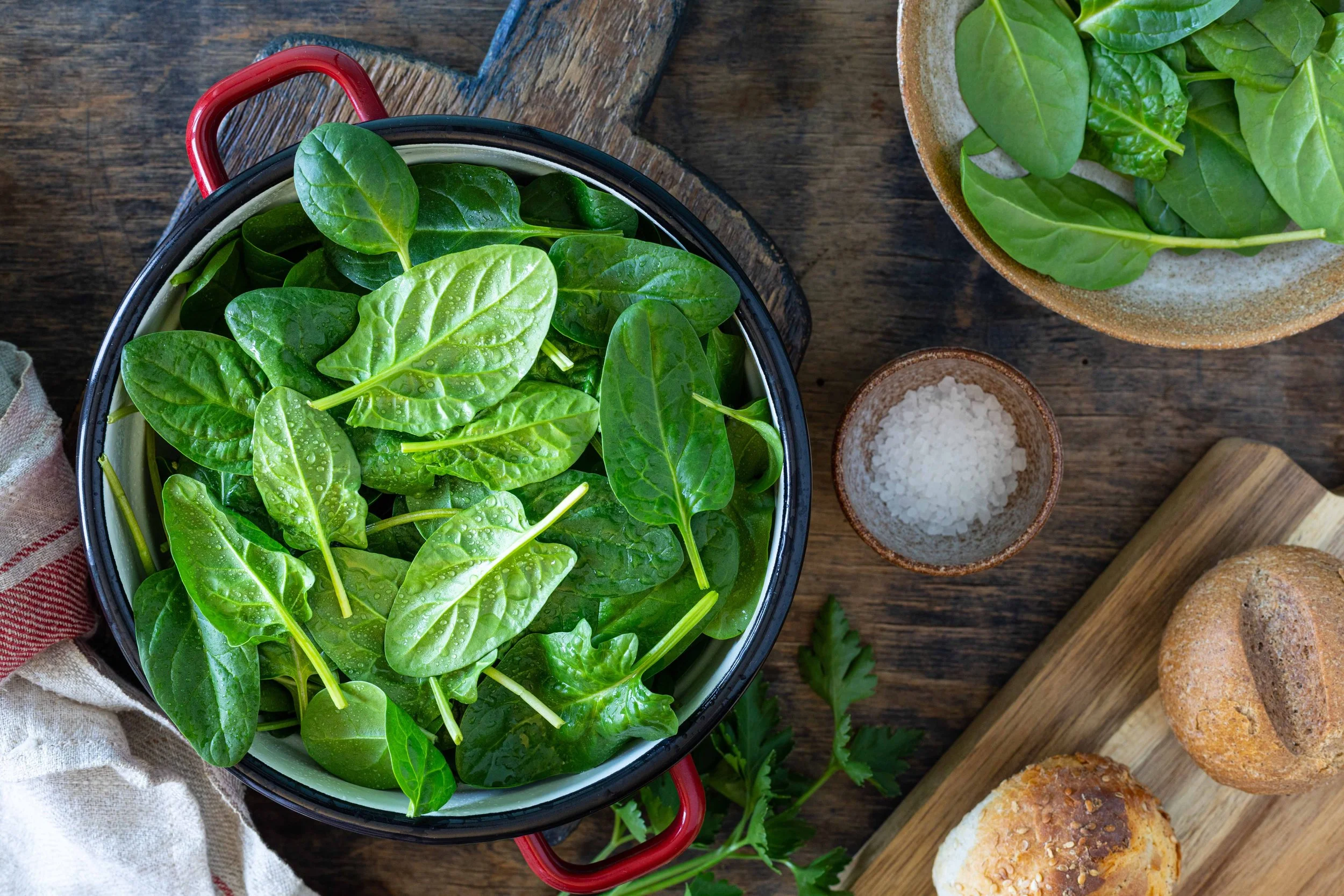
Open Source Photo - Bowl of Perpetual Spinach Leaves
Caucasian Spinach - Hablitzia tamnoides
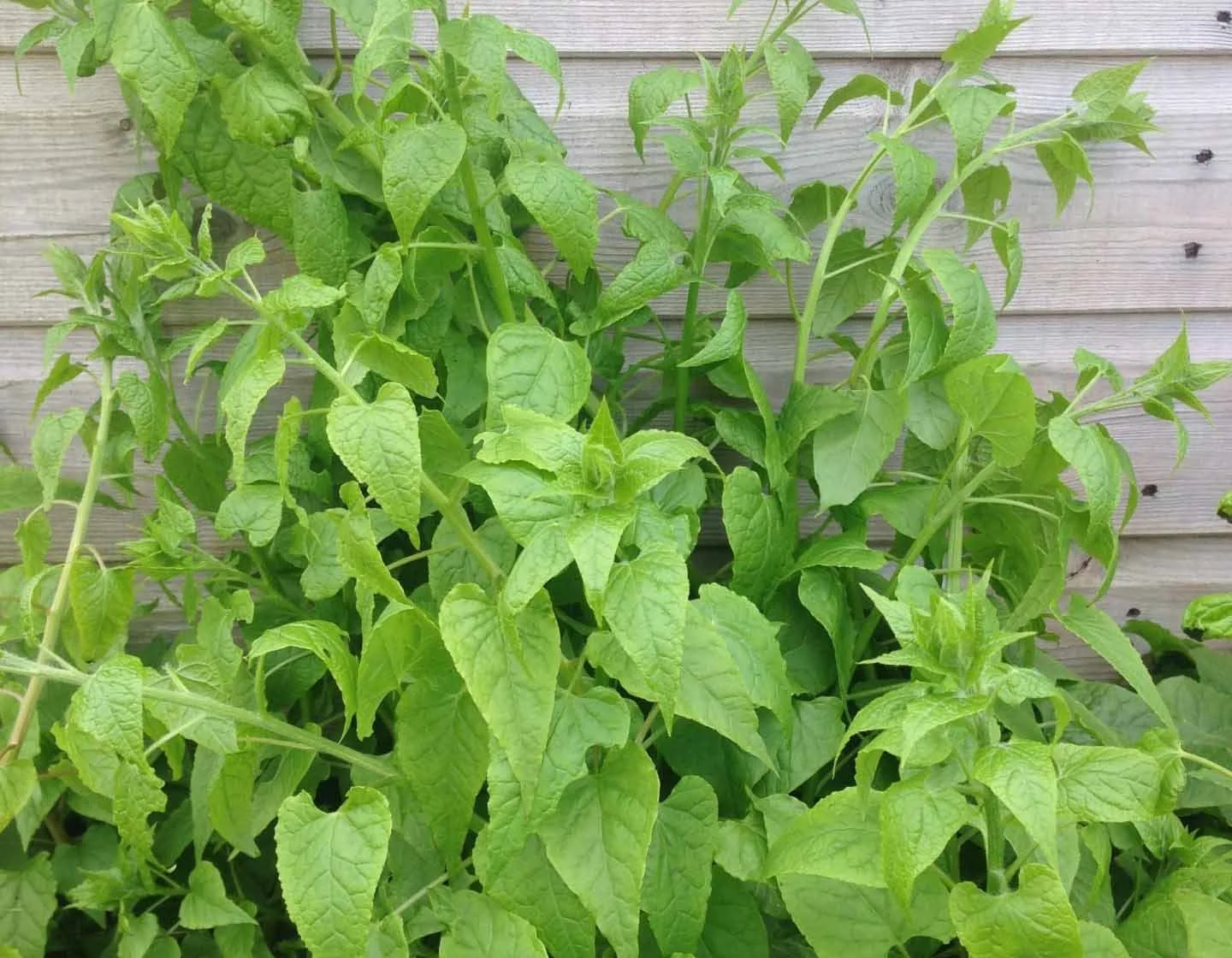
Open Source Photo - Caucasian Spinach climbing a trellis. It can reach XXm in height and will happily grow in shady conditions.
To clarify, Spinach is spinach. Perpetual spinach is a variety of Swiss chard also known as ‘leaf beet’. Caucasian spinach is a climbing plant with leaves that can be eaten, much as spinach leaves are eaten. It enjoys shady corners which is a useful quality and it is perennial.
Sow perpetual and actual spinach seeds in April where the plants will grow. Between the above three options, it is possible to have these greens all year round. They are worth growing in quantity as they are very healthy and have a wide variety of uses.
Culinary tips – The above plants are all nutritional powerhouse, low in calories but high in nutritional benefits – including vitamins, antioxidants and fibre. Young leaves can be eaten raw in salads, adding to the look, texture and taste. Spinach leaves can be added to curries, curry side dishes and work well in Mediterranean-type stews. They can be sautéed, steamed and baked, with the addition of butter, garlic, spices and seasoning, to personal taste. Spinach leaves are a common addition to quiches and soufflés and can also be blended with fruit and yogurt for healthy smoothies.
3 Kale – Brassica oleracea
There are many kale cultivars available. Kale leaves can be flat, bumpy or curly and vary in colour from bright greens to deep purples. Kale is a biennial plant (setting seed in the second year), but veggie gardeners are really only interested in harvesting leaves in the first year when they are most palatable. They are easy to grow from seed, taking as little as 4 weeks from sowing to first harvestable baby leaves. But don’t start to pick the small leaves until the plant has several sets of leaves, ensuring a continuous future harvest. Most kale plants are ready for harvesting after about 60 days when the outer leaves are hand-sized. To harvest, pick a few of the outer (lowest) leaves from each plant, leaving the centre to continue to grow. If left too long, these outer leaves can become thick and tough. Picking as described will encourage each plant to continue to grow leaves for 6 months or more, from mid-summer through autumn into winter and perhaps beyond, depending on location. Kale can cope with temperatures down to about minus 6C. The leaves may even become a little sweeter after the first frosts.
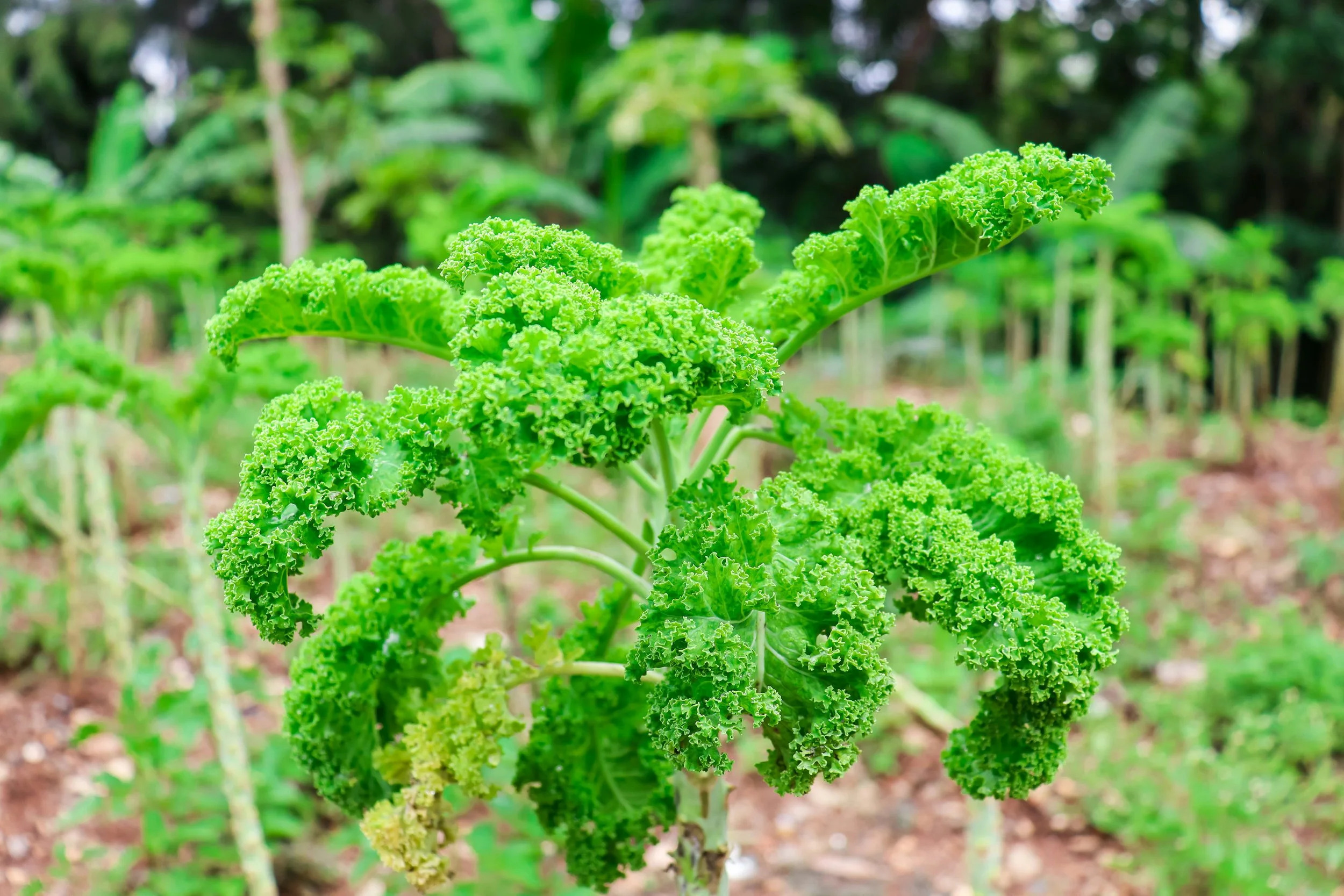
A curly-leaf variety of kale showing the long stems where leaves have been previously harvested.
Credit – Photo by Victor Birai xdCRmeHIicw Unsplash
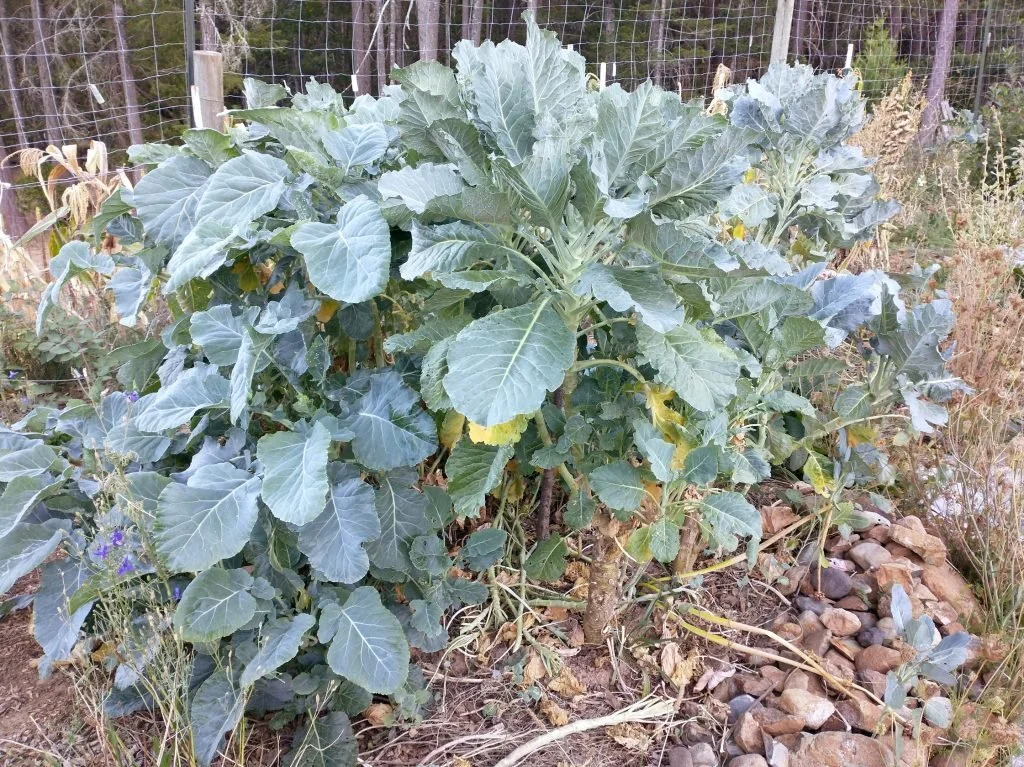
Open Source Photo - Perennial Kale
Culinary tips – Baby kale leaves can be eaten raw in salads after the tougher stems are removed. They have a mild flavour and crunchy texture. They are nutrient dense, including vitamins A, C and K. Mature kale leaves can be bitter and stems can be tough, so after washing, remove tough stems and tear or chop the leaves into bite-sized pieces. Prepare as other leafy-green side dishes – sauteing, steaming, roasting to soften the texture. Other possibilities include baking as kale chips (a healthier alternative to potato chips), using in soups and quiches. Kale can also be used in smoothies where it is normally paired with sweeter fruits such as bananas or apples for flavour balance.
4 Leeks - Allium ampeloprasum
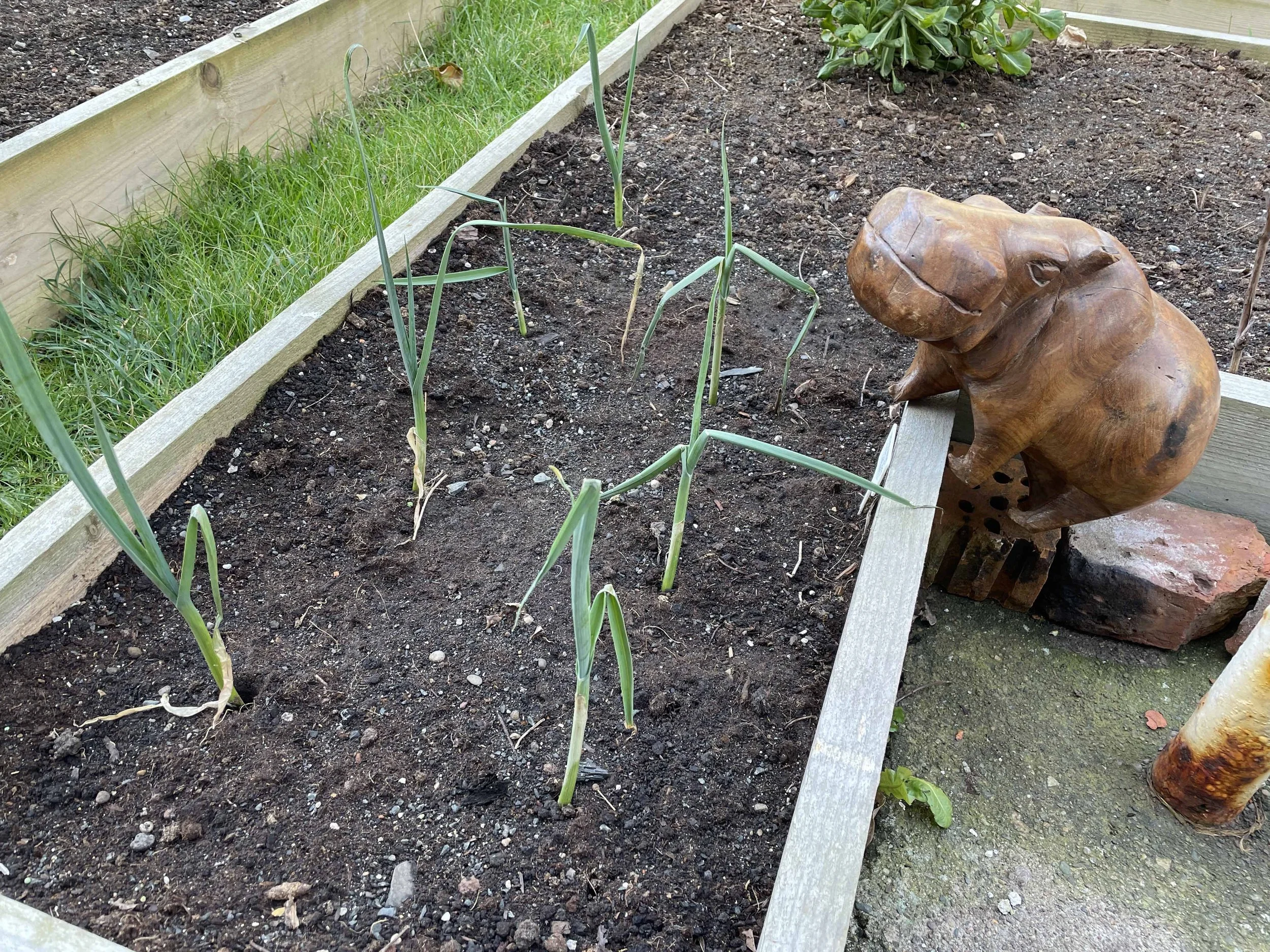
Some ‘free’ leek offsets taken from 2 leeks left in the ground last year. They were separated and grown in individual pots over winter and were transplanted in mid-April. ‘Happy’, my pigmy hippo seems to approve!
Culinary tips – Leeks contain virtually no fat and are nutrient dense with vitamins, minerals, fibre and anti-oxidants supporting overall health. In terms of flavour, they fall into the onion category, although not as sharp, which means they have a wider range of uses, not simply as an addition to other dishes. They can be roasted with olive oil or braised with cheese; fried and mixed with potatoes and other veg in quiches; mixed with potatoes and other veg for thick comforting cold-weather soups; sautéed as a side dish with roasted carrots; sautéed with onions, mushrooms and perhaps chicken pieces, in a creamy sauce, as a rich pie filling with either puff or shortcrust pastry.
The above veg do not require a green house or any modified conditions to grow well. With just a little planning, they can provide a home-grown supply of daily ‘greens’, supporting a healthy diet right through winter. Using SeeHow’s Veg Growing Guides can help you easily create a vegetable growing and harvesting calendar.
Happy harvesting, from SeeHow
The above Text is copyright of Wincenty (Wicek) Sosna. Please contact SeeHow (07939 226417) for permission to reproduce in any way, in part or as the complete text.
There are over 70 blogs on SeeHow’s website covering a wide range of environment and garden-related matters.
For 15% off our gardening books – www.seehow.co.uk/shop
Wicek, now semi-retired, is a multi-award-winning architect. He is also a writer, horticulturalist and keen gardener. He lives in Macduff on the dramatic north Aberdeenshire coast. He invented the unique interactive SeeHow – Flower and Vegetable Growing Guides concept, to actually show how plants and veg grow throughout the calendar-year. Because SeeHow Guides work visually, anyone can use them - from school children to garden design professionals. Pictures really are worth 1,000 words!
Exciting Opportunity!
SeeHow is looking for investors / crowdfunders to help it grow – specifically to develop the SeeHow App.
Please spread the word to friends and colleagues you think may be interested. For anyone who would like to know more about becoming part of the SeeHow adventure, please contact Wicek Sosna on +44 (0) 7939 226417