
To Feed or Not To Feed - That is the Question
There has been a lot of debate recently about using bird feeders in our gardens, particularly at this time of year to help birds survive through the cold weather. It seems the consensus amongst the experts is that on balance, we should not directly feed birds via bird-feeders – the reason being that these are unnatural sources of food, potentially affecting the birds natural foraging instincts. Instead of directly feeding, the advice is to create garden habitats that provide food through the plants grown, regardless of season. Plants encourages greater biodiversity, in turn increasing food and habitats for birds. In effect this mimics the natural landscape.
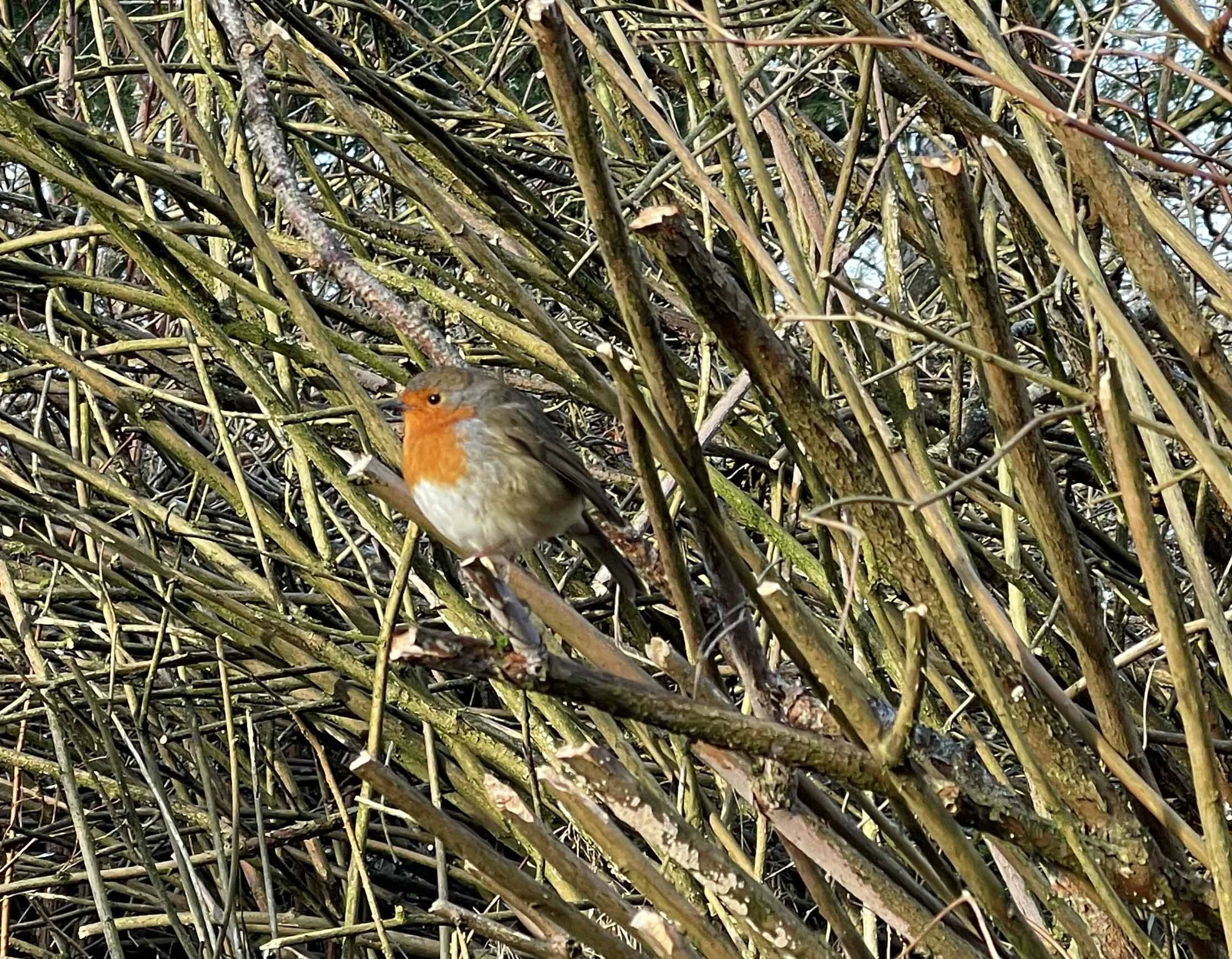
A robin – maybe the nations most loved bird. While they follow me around my garden when I’m out gardening, they also check out the feed-table, selecting their preferred seeds from the mixture
This is a bit of a contentious issue. There is something beautiful about sitting and watching different species of birds as they come and go to the focal point of a feeder. In addition, we all know that most of our rural landscapes are managed for agricultural production. Vast swathes of monoculture provide food for us, ignoring the need to support natural levels of biodiversity. The ‘food chain’ is broken. So it is understandable that huge numbers of us try to offset the impact of farming practices by putting out food and creating habitats to support biodiversity. We know that relying on the diminished natural environment to provide for the needs of all biodiversity is not enough.
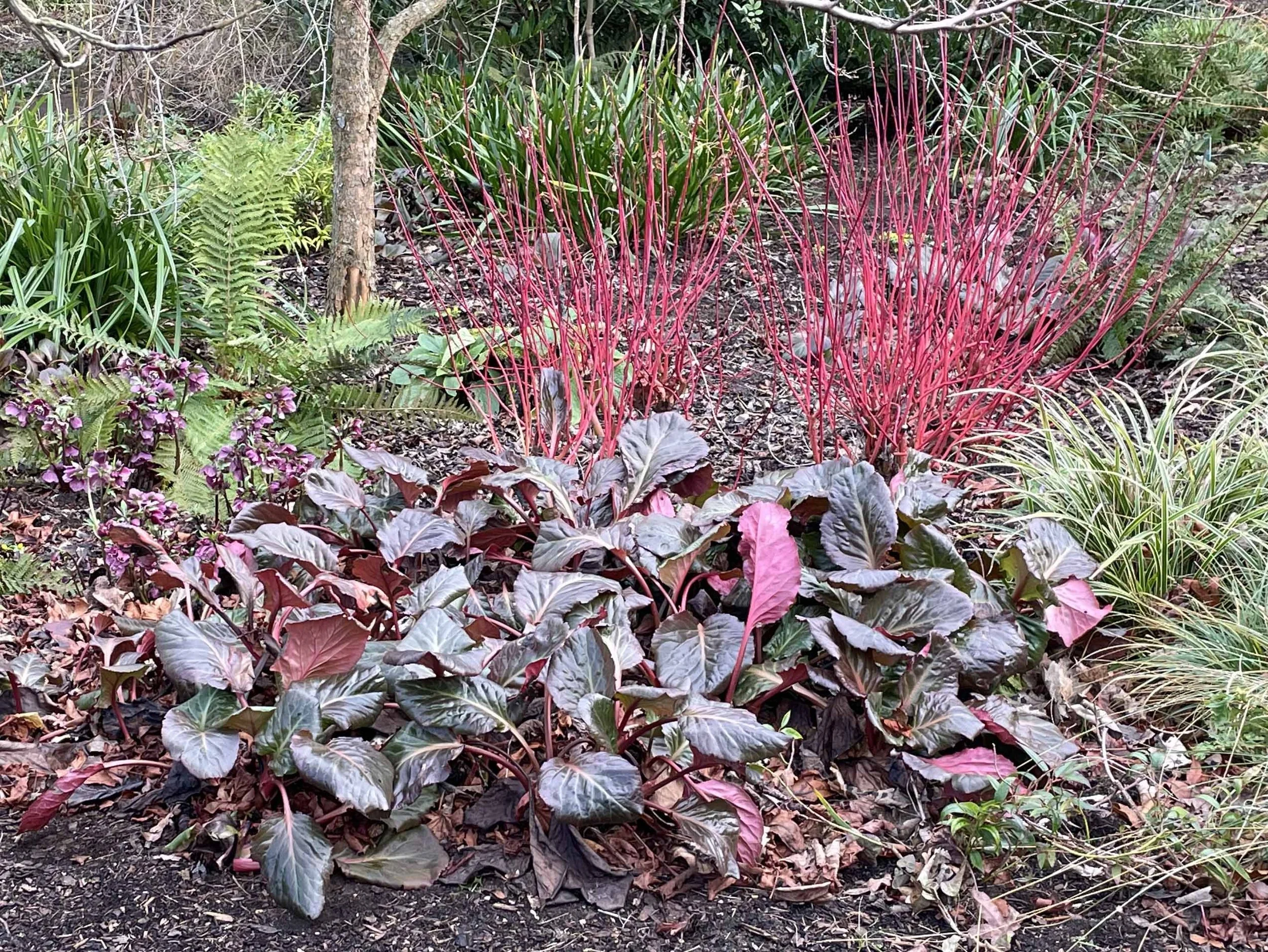
Bergenia cordifolia provides colour and great ground cover during the winter months. Cornus sanguinea (Dogwood) in the background provides colour berries too that are eaten during the autumn and winter months.
In large towns and cities, our urban birds may not have access to the countryside, relying instead on back-gardens, rooftop gardens and parklands. So there may be an argument for continuing to use artificial feeders while we transition towards fully biodiverse eco-cities.
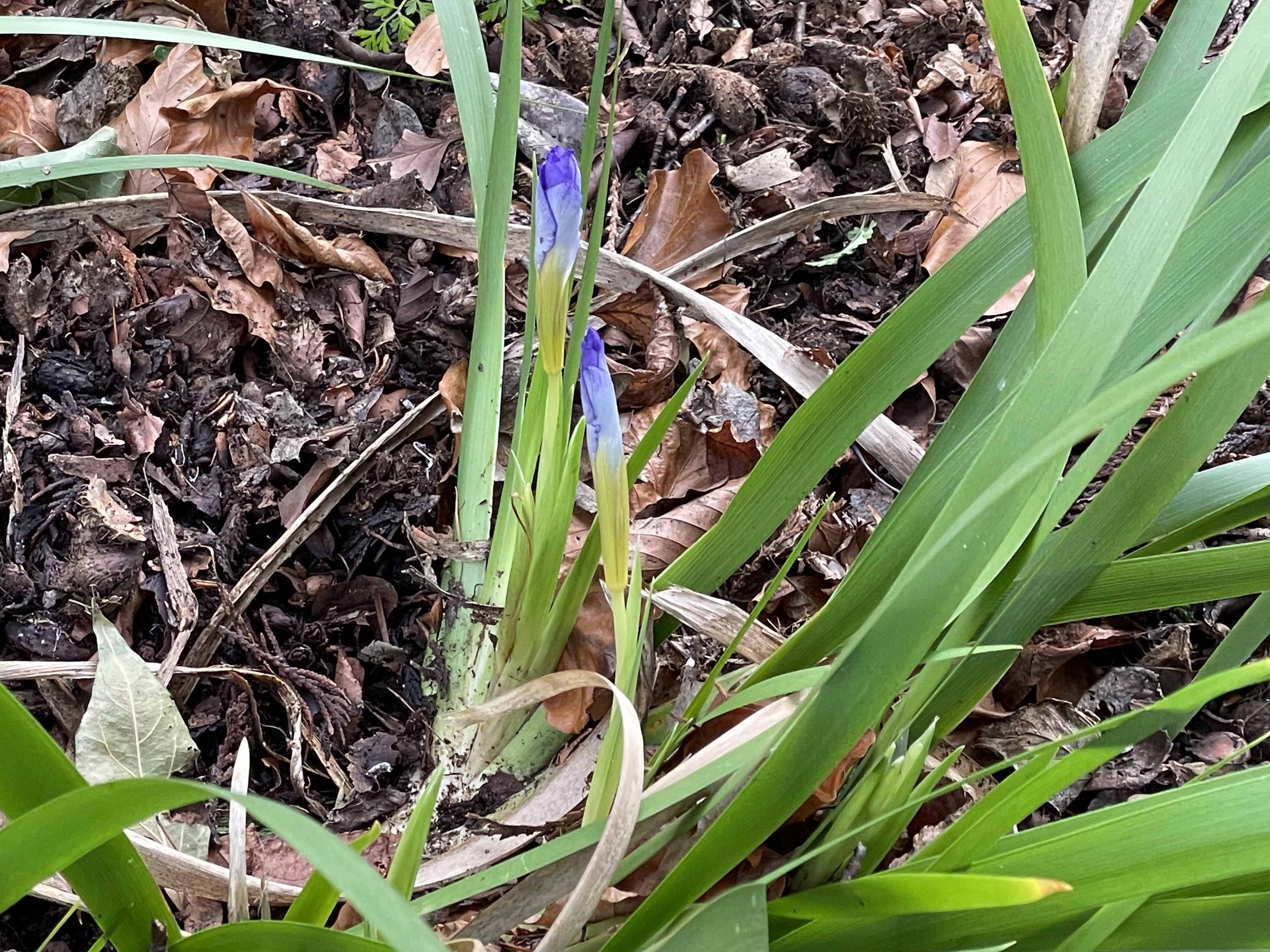
The winter-flowering Iris – beautiful flowers ranging from mid to dark blue. Fallen leaves are left to naturally decay back into the soil improving conditions for biodiversity both in the garden and in the soil itself
One advantage we gardeners have over farmers is that our gardens are for ourselves. We can therefore adjust our planting to support biodiversity while also giving us what we want. We can think short term re annuals, mid-term re perennials and long term re woody shrubs that may include winter berries to feed the birds, as well as structure. This is why it is so important to consider the entire lifecycle of our garden plants when choosing what to add to our borders. The unique SeeHow interactive gardening book concept was created for exactly this purpose. For each plant (177 flowers and 107 veg currently available), botanical illustrations are used to show the life of each plant or veg over the whole 12 month annual cycle. By combining the illustrations together, a 12 month ‘view’ is created showing how the plants work together. No other gardening book does this.
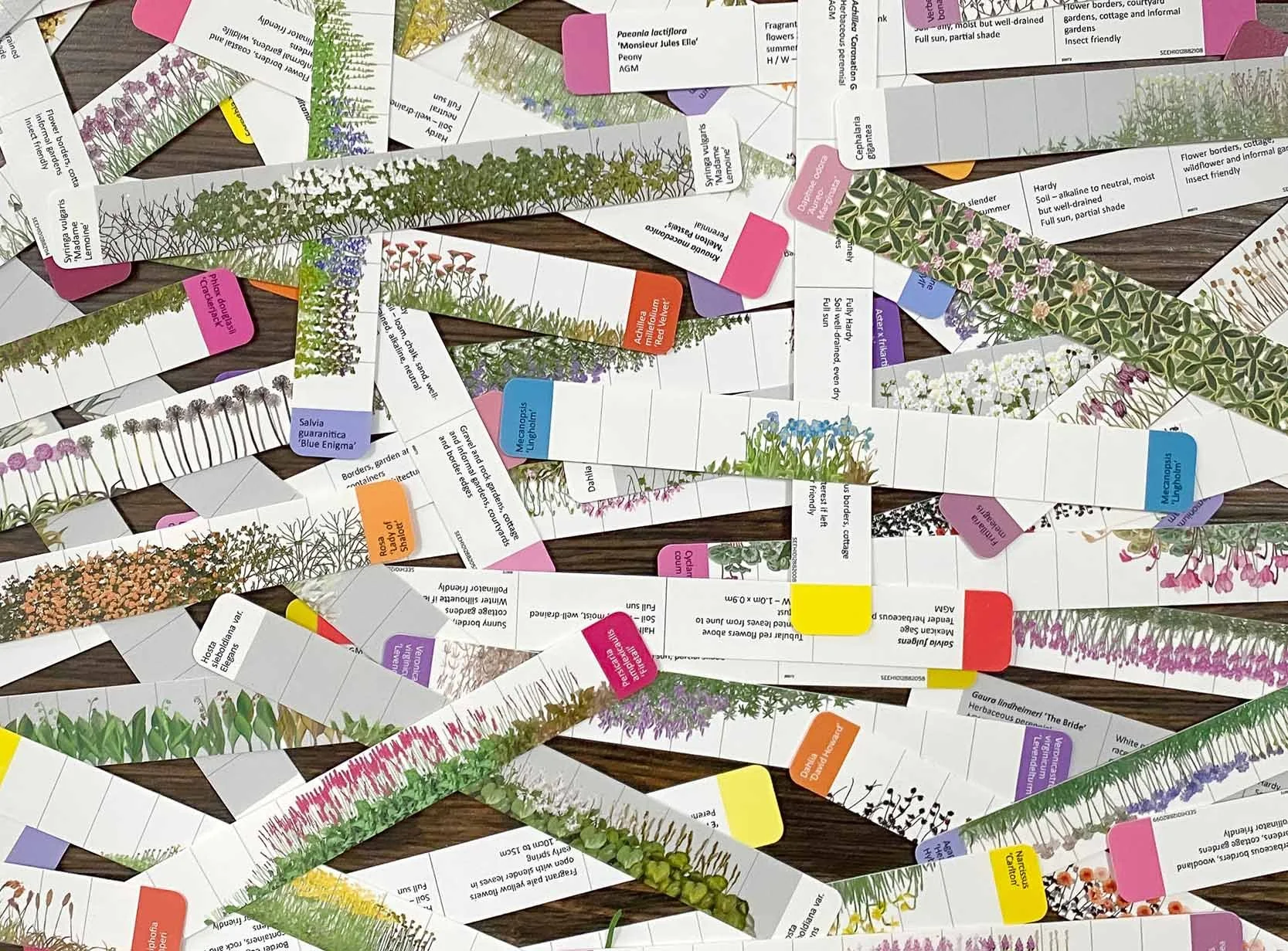
177 plants, each one illustrated to show its annual lifecycle overlaid across the 12 month calendar grid – January to December. Use them to plan year-round garden colour and structure
Borders and beds can still be colourful and beautiful - full of the plants that we all love growing, while also providing homes for creatures of all types. This is more likely to create the natural habitat / food chain, supporting biodiversity in full – not just birds. There may even be too much biodiversity! Last year, blackfly on both lupins and broad beans where an issue in my garden and of course there were slugs and snails amongst the lettuces. Both can be treated with natural remedies such as spraying the blackfly with soapy water and of course we have our own vigilance to spot the slugs (although one or two still slipped through to the salad bowl!). But all life is important and should be valued, so we should try to be tolerant. I had families of sparrows and tits living in my front garden last year feasting on the insects living amongst the perennial plants – great to watch. Assuming most of us are not aiming for horticultural prizes, a bit of untidiness is simply nature taking its course and, for me, makes for a more fulfilling, seasonal garden.
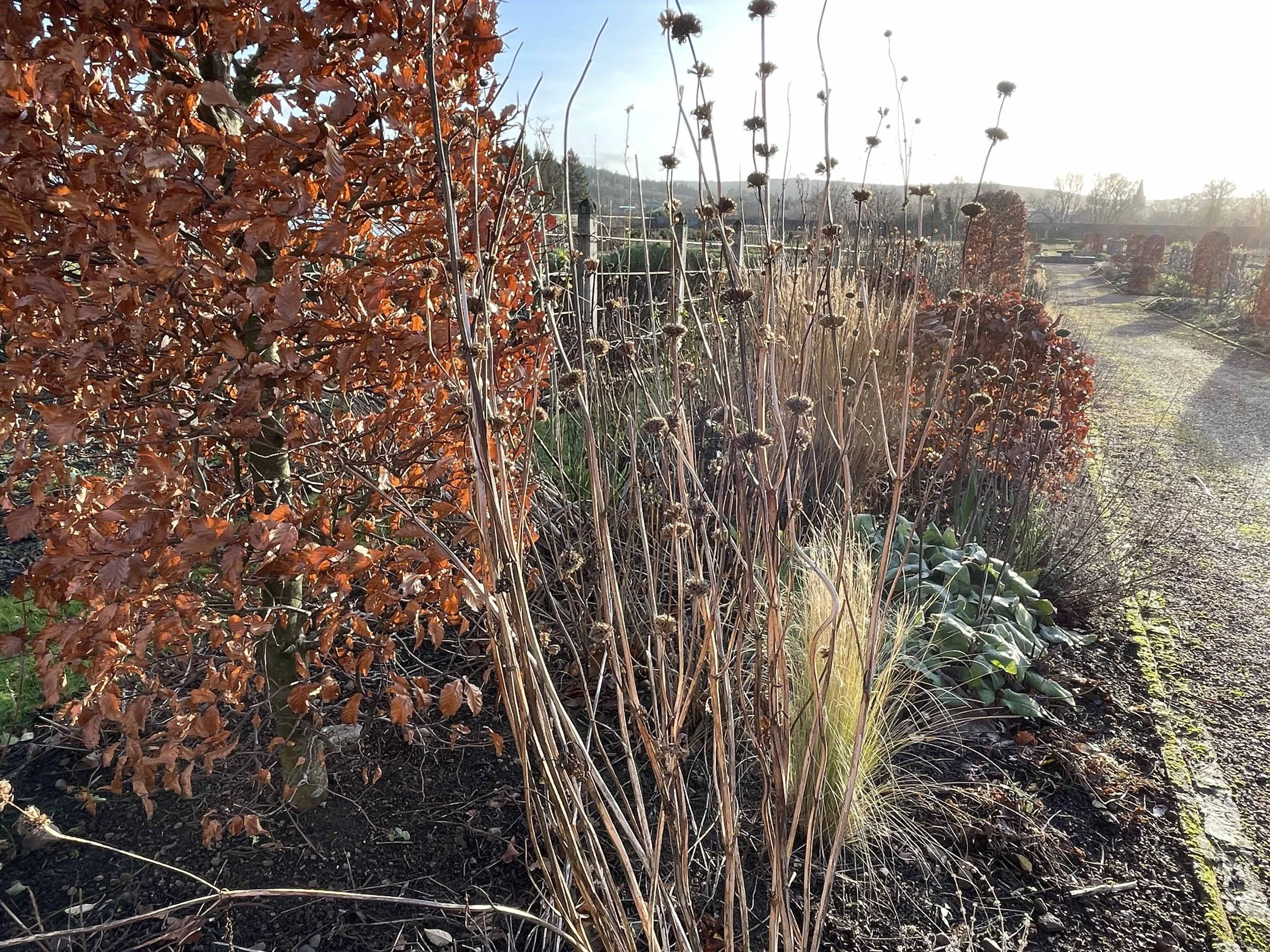
The dead brown beach leaves remain attached during winter (called marcescence). They glow in the low winter sun, punctuating the border, creating focal points. They are good for biodiversity too. The old leaves fall off as the new leaves appear. Cephalaria gigantia can grow to 2.5m so a large border is needed. Great summer colour and winter structure.
Applying this thinking, if we are choosing herbaceous perennials, then ones that leave dried stalks and seedheads standing through winter help biodiversity without us having to do anything at all. Evergreen plants with berries such as cotoneasters and ivy provide berries and shelter too.
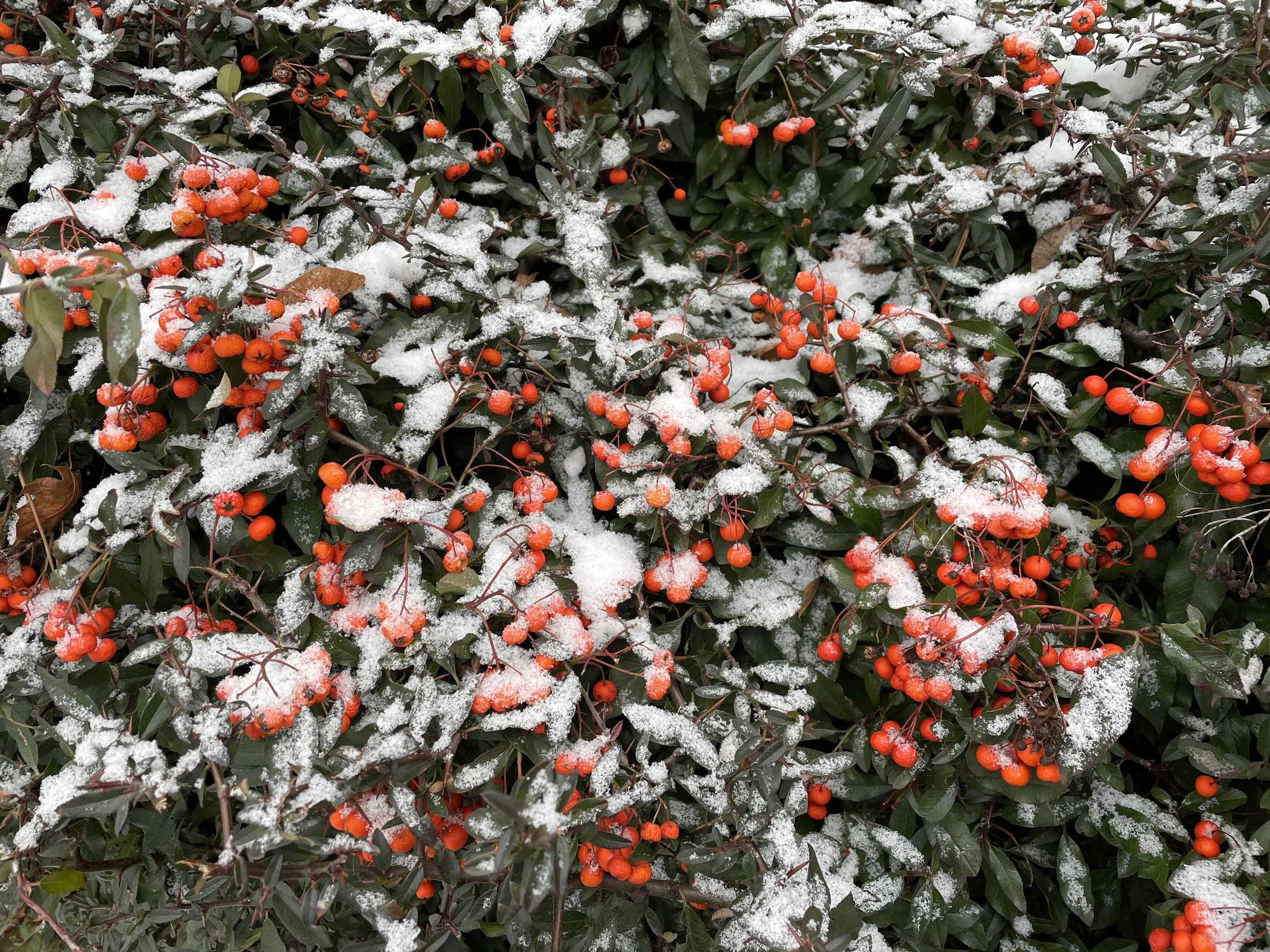
Pyracantha provided winter berries and shelter too for birds and insects – can be clipped to form screens and hedges so useful around garden edges as well as up against walls. Also available with yellow and orange berries
When it gets down to basics, our gardens are actually ‘outside spaces’ that we share with the natural world. We can make them as ‘welcoming’ as possible by choosing the right plants. So, to the question - to feed or not to feed? The answer is not straightforward. My bird feeder blew down in a storm not long ago so I decided not to replace it. But the recent weather has been tough and I couldn’t not try to help out – it’s instinct I suppose. So I put out a small table with assorted seeds and some chopped apples. Starlings, sparrows, tits, robins, crows, pigeons and blackbirds have all been visiting. Despite this, I aim to mostly ‘phase out’ artificial feeding between now and early summer. Instead, I am now looking at the plants themselves to provide year-round support … eventually replacing the feeding station. A final thought - there are millions of gardens … let’s aim to turn them into millions of natural biodiversity oases!
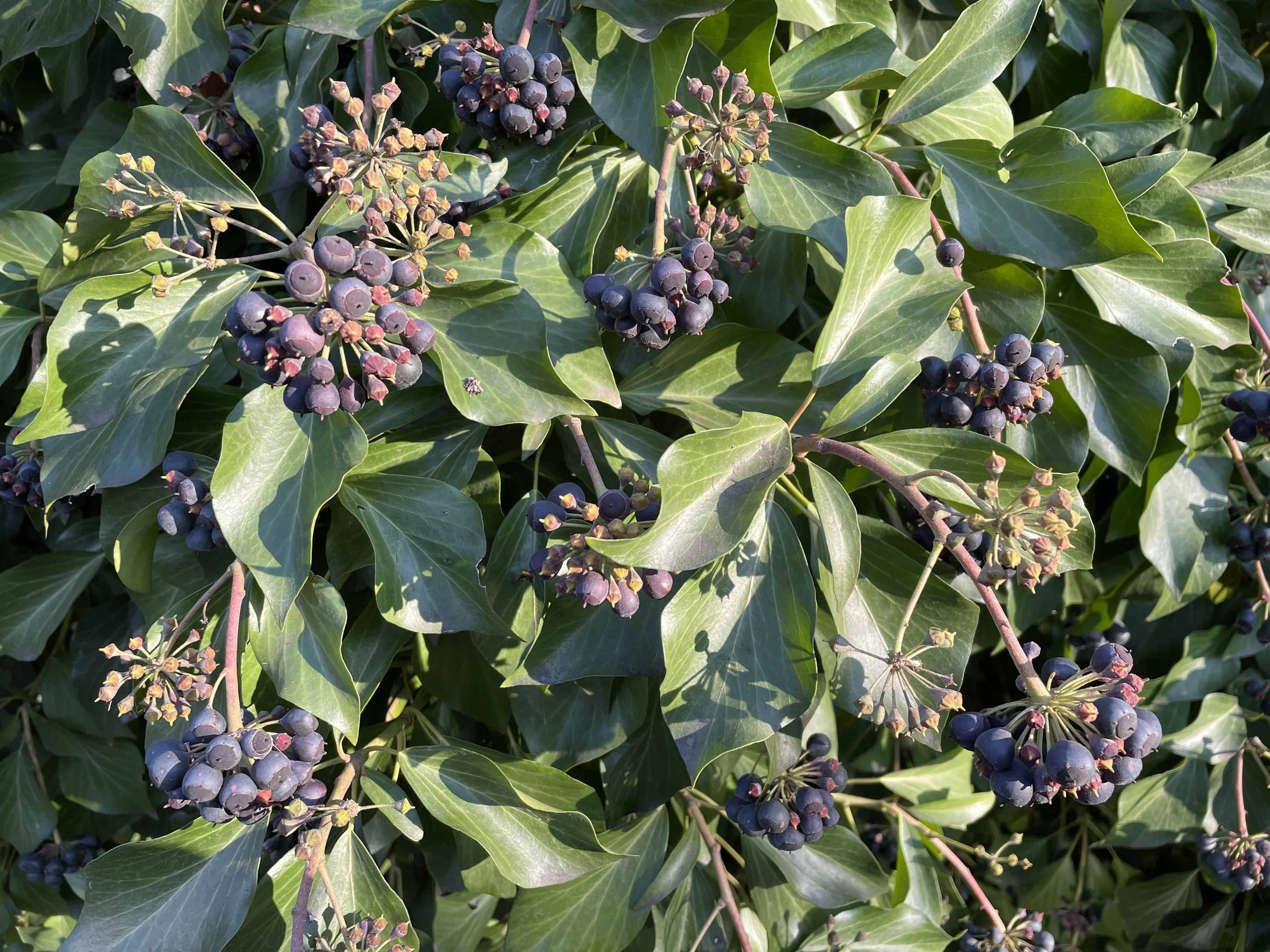
Native Ivy with winter berries – winter food for many birds. Ivy does need to be kept in check as it will keep sending our runners that can appear many meters away.
Happy Gardening from SeeHow!
The above Text and all Photographs are copyright of Wincenty (Wicek) Sosna. Please contact SeeHow (07939 226417) for permission to reproduce in any way, in part or as the complete text.
Wicek, now semi-retired, is a multi-award-winning architect. He is also a writer, horticulturalist and keen gardener. He lives in Macduff on the dramatic north Aberdeenshire coast. He invented the unique interactive SeeHow gardening book concept, to actually show gardeners how plants and veg grow throughout the calendar-year. Because SeeHow books work visually, anyone can use them - from school children to garden design professionals. Pictures really are worth 1,000 words!
Exciting Opportunity!
SeeHow is looking for investors / crowd-funders to help it grow – specifically to develop the SeeHow App.
Please spread the word to friends and colleagues you think may be interested. For anyone who would like to know more about becoming part of the SeeHow adventure, please contact Wicek Sosna on +44 (0) 7939 226417