
Valentines Day - Growing Love
Roses are the nation’s favourite flowers when it comes to Valentines Day. What better way to say, ‘I love you’ than giving a classic bouquet of red roses. Some people give tulips, which apparently denotes ‘perfect love’ and others opt for orchids or lilies. Whatever the choice, all flowers are beautiful – full of warm emotions that are often difficult to put into words.

Beautiful red roses in the author’s own garden
Once received, the flowering blooms will find pride-of-place somewhere in the home, so they can be seen and appreciated for as long as possible – hopefully at least a week or two – a reminder of shared love and affection. But what about something more ‘long-lasting’. Instead of giving a bouquet, if you have a balcony or garden, why not give the real thing as well. A real plant will flower for many years to come. Over time you could even create a Valentines Day border, perhaps winter-flowering or maybe flowering from late spring into autumn, just as roses do … or perhaps doing both with under-storey planting beneath roses.
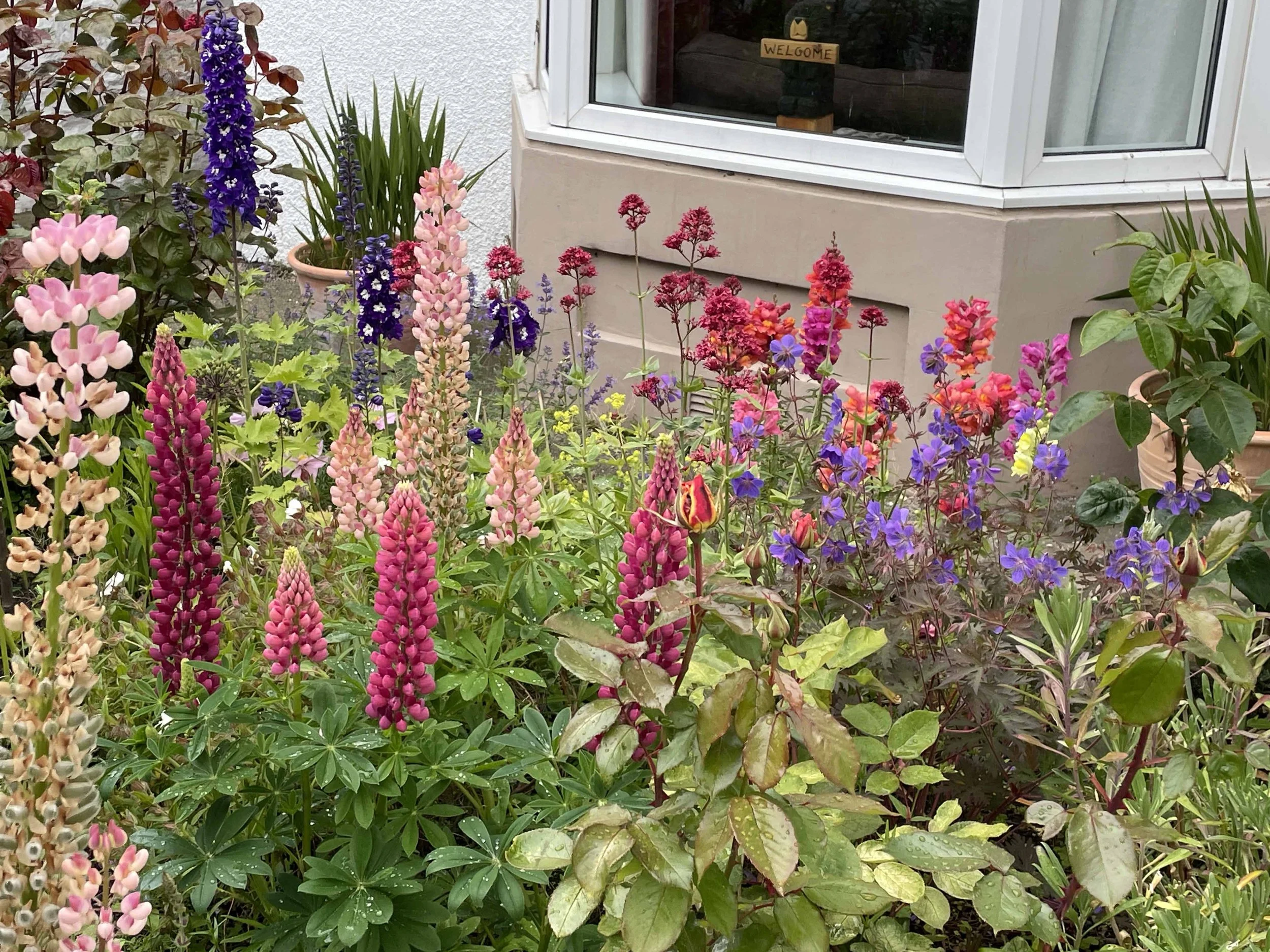
Three different shrub roses, Lupins, Delphiniums, Valerian, Wall Flowers, Geraniums, Gaura, Crocosmia, Verbascum and more … each year another plant is squeezed in, to provide joyful colours and mixed structure and texture in this wonderful flowering border
While February 14 is a little early for many common flowering plants, there are still plenty that will provide winter colour, such as Eranthis (yellow), Heathers (many colour), Crocuses (many colours), Cyclamen (white, pink, purple), Iris unguicularis (blue), Galanthus (snowdrops -white), Helebores (many colours – easy to collect seeds and sprinkle around the flowerbed), to name a few. Some of these will spread (if allowed) to create colourful Valentines Day winter / spring borders over time. Many can also be grown in pots, bringing the flowers indoors – perfect for anyone who may not be able to easily get outside.
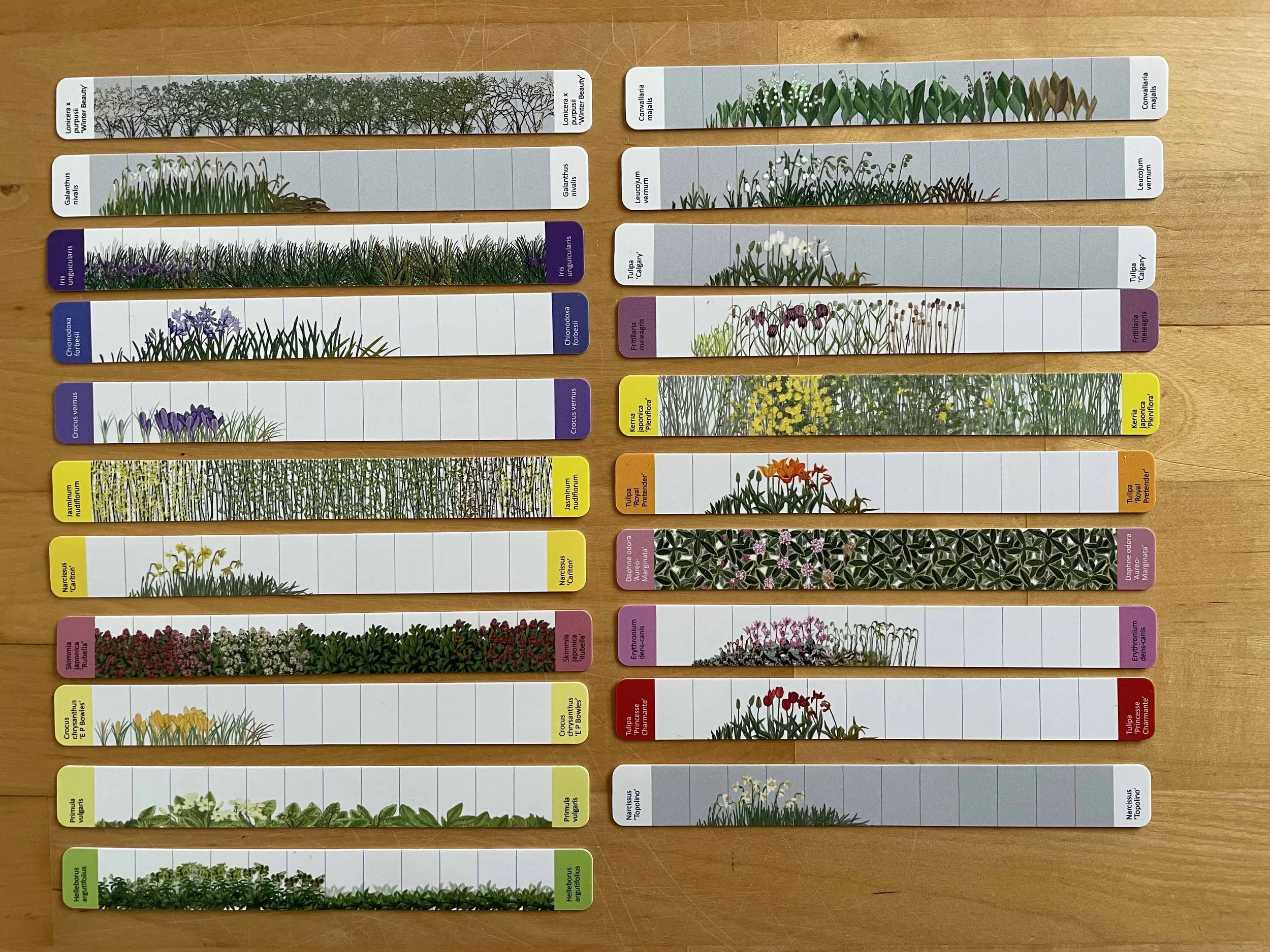
As well as many commonly-grown winter-flowering bulbs and perennials that can also be grown indoors in pots, ‘SeeHow – Plants and Flowers’ also contains a number of winter-flowering woody shrubs www.seehow.co.uk/shop
Back to roses, they do not normally in flower in UK gardens at this time of year. However, now is a good time to plant roses, as they are dormant between late autumn and early spring. Typically, roses start to flower in early summer (depending on type) and some will continue flowering right through until the first frosts. If you live in an area with very little frost and a suitable local microclimate, you may even enjoy blooms right through Christmas!

Yellow shrub roses in a garden on the north Aberdeenshire coast that regularly blooms through Christmas and into January
So, along with a beautiful bouquet of flowers for Valentines Day, why not choose a rose to grow in your garden. There are many types to choose from – bush roses, standards, climbers and ramblers and of course more colours than you will see in a paint catalogue! Your new rose will reliably provide sumptuous blooms for long periods each year and for many years to follow … the perfect reminder of Valentines day - see your love grow!

Simply beautiful!
Happy Valentines Day from SeeHow!
To buy SeeHow’s unique Flower and Vegetable Gardening Books, go to our online shop - www.seehow.co.uk/shop
The above Text and all Photographs are copyright of Wincenty (Wicek) Sosna. Please contact SeeHow (07939 226417) for permission to reproduce in any way, in part or as the complete text.
Wicek, now semi-retired, is a multi-award-winning architect. He is also a writer, horticulturalist and keen gardener. He lives in Macduff on the dramatic north Aberdeenshire coast. He invented the unique interactive SeeHow gardening book concept, to actually show gardeners how plants and veg grow throughout the calendar-year. Because SeeHow books work visually, anyone can use them - from school children to garden design professionals. Pictures really are worth 1,000 words!
Exciting Opportunity!
SeeHow is looking for investors / crowdfunders to help it grow – specifically to develop the SeeHow App.
Please spread the word to friends and colleagues you think may be interested. For anyone who would like to know more about becoming part of the SeeHow adventure, please contact Wicek Sosna on +44 (0) 7939 226417