
Do Less and Get More
In the depths of winter it can be hard to imagine our gardens, hedgerows, verges and meadows, brimming with colourful flowers – cultivated or wild. So it was enjoyable to watch recent episodes of BBC Gardeners World showing footage of inspirational gardens from last year. Growing plants is a very rewarding pastime and creating beautiful gardens - even more so. But modern garden design is not just about creating ‘beautiful borders’. It needs to address the nagging issues of climate change and the biodiversity imbalance arising from the tendency to ‘over-curate’ gardens specifically for us humans.This is a critical issue. It is therefore becoming ever-more-important that we in the ‘gardening fraternity’ do our bit, providing as much room as possible for the natural world, in all its diversity. I’m describing ‘garden rewilding’ - planting the wildflowers that thrive in your areas as part of your garden border mix. This may mean ‘letting go’ of an over-curated flowerbed. Why not adjust some of your planting plans; let nature run amok here-and-there and see what happens!
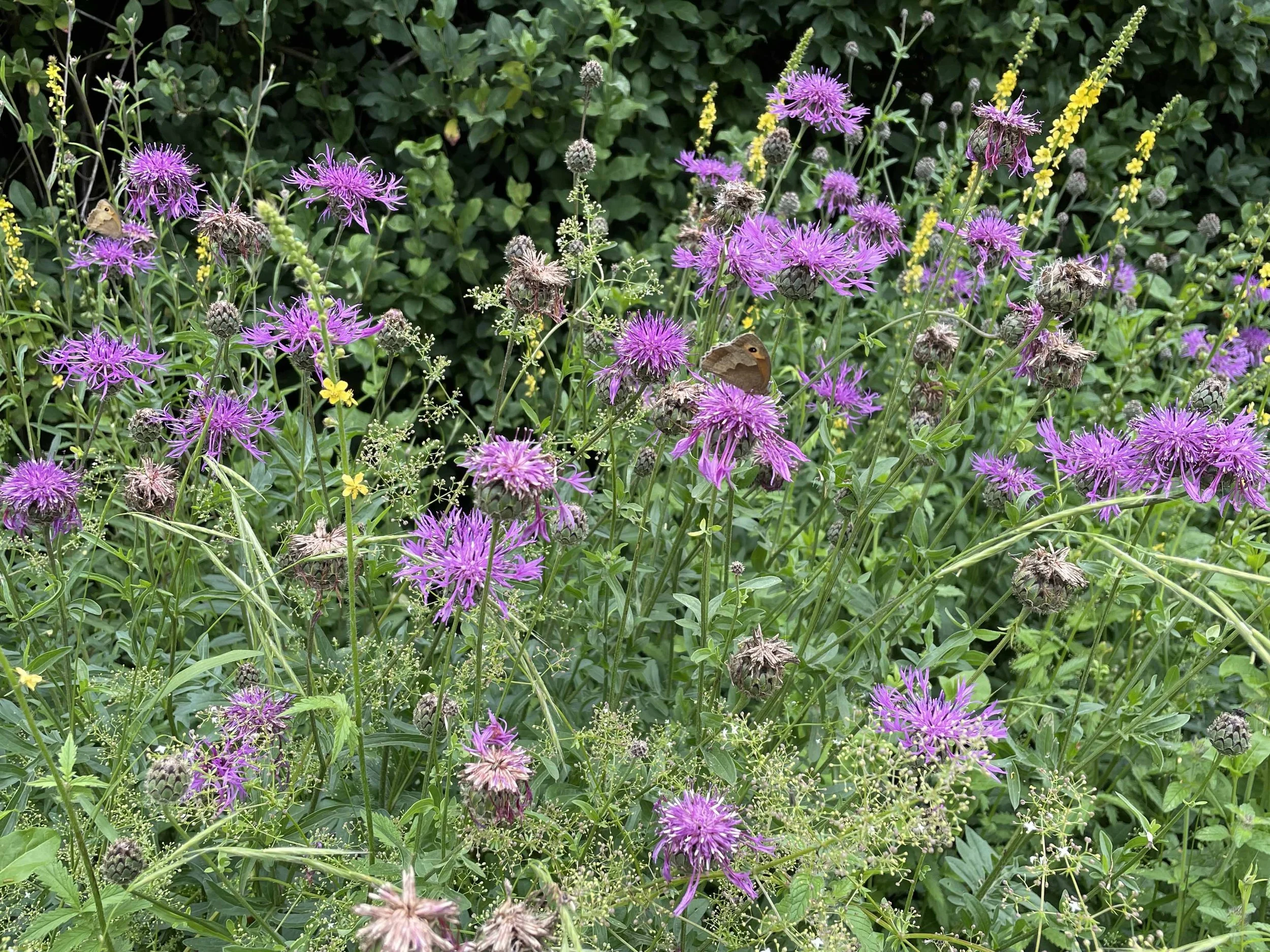
A perennial wildflower border – no curation involved. Spot the ‘Meadow Brown’ butterfly on the cornflower. Do less and get more!
Squeezed against a Sloe and Cherry Plum hedge (food for human foragers too) - a wildflower border above, growing Cornflowers, Agrimony, Buttercups, Clover, Yarrow, and many plants and grasses I cannot name, trying to out-compete each other for space and height. In so doing, they create shelter and food for biodiversity both above and below ground level. An area of simple, natural, uncurated beauty we can all enjoy. By choosing the right perennials, there can be lots for us to forage too!
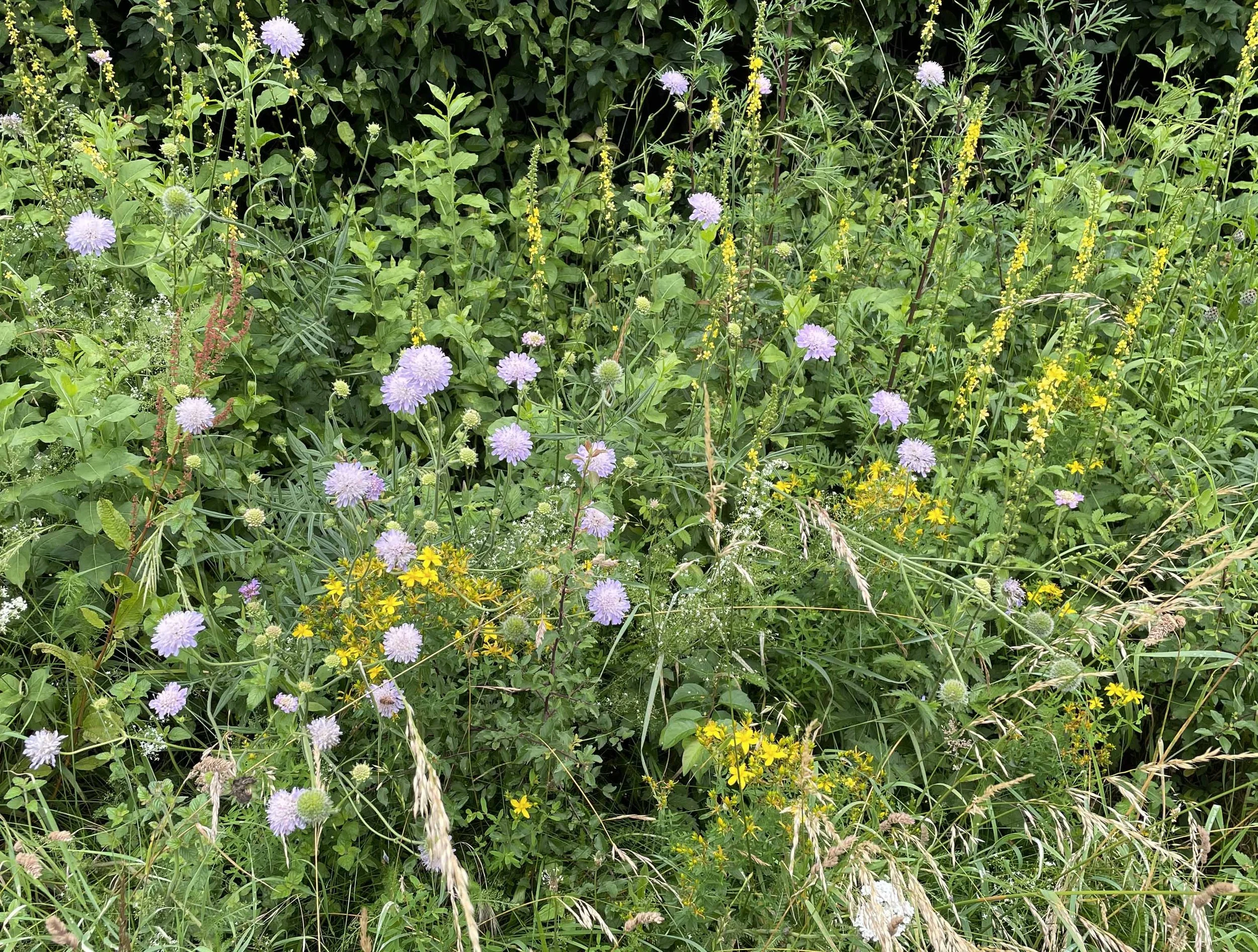
Agrimony, Field Scabious (Knautia arvensis) and sorrel would look beautiful in any naturalistic garden, attracting butterflies, spiders, insects and bees as well as creating healthy soil for fungi and all of the beasties that lives there.
The above photo reminded me of wildflowers growing in the fairway rough, edging my local golf course. The fairways were mown as normal for golf, preventing grass setting seed and taller wildflowers from growing. But the longer rough grass that was not cut showed the variety of wildflowers growing in the area. Last year I spotted the flowering spikes of common purple orchids. There were quite a few, scattered across an untended banking that hadn’t succumbed to brambles and gorse. It just goes to show what may appear if the condition are right and we let nature take its course.
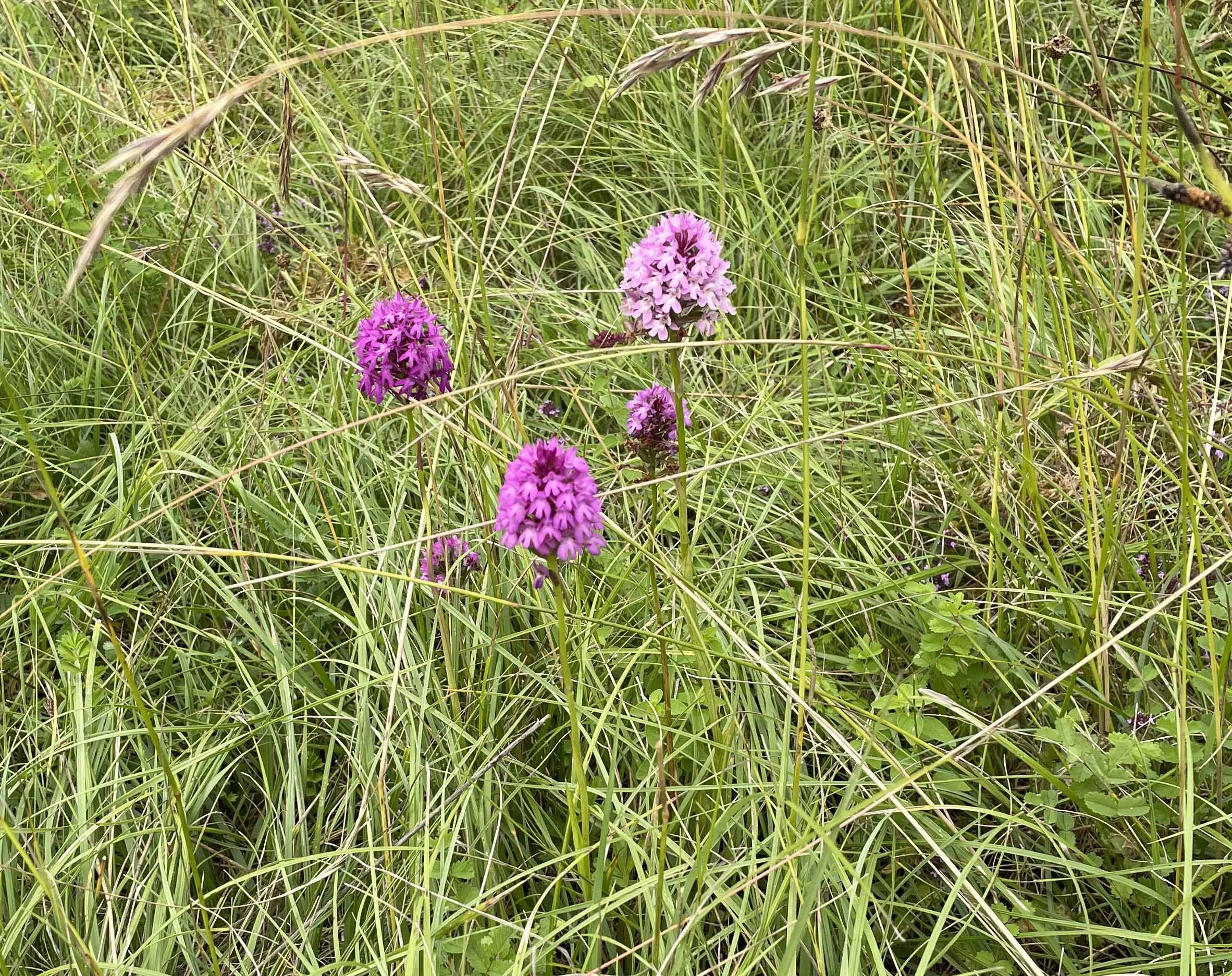
A grassy bank left uncut and full of orchids. In addition, Thyme was everywhere, growing in low mounds amongst the grassy tussocks.
The orchids were a reminder of what may exist in any soil, if an area is just given a chance to grow. A few days after seeing the golf course orchids, I came across more of the same on another slope in a park normally mown by the local authority. Budget cuts have reduced the areas now tended, with turf allowed to grow freely. Many wild flowers have appeared including same purple orchids and with them, more habitat for biodiversity. Leaving the grass uncut saves the council money too – a win, win! It is reassuring to see nature ready to spring back whenever an opportunity is provided. So, let’s provide more of these opportunities!
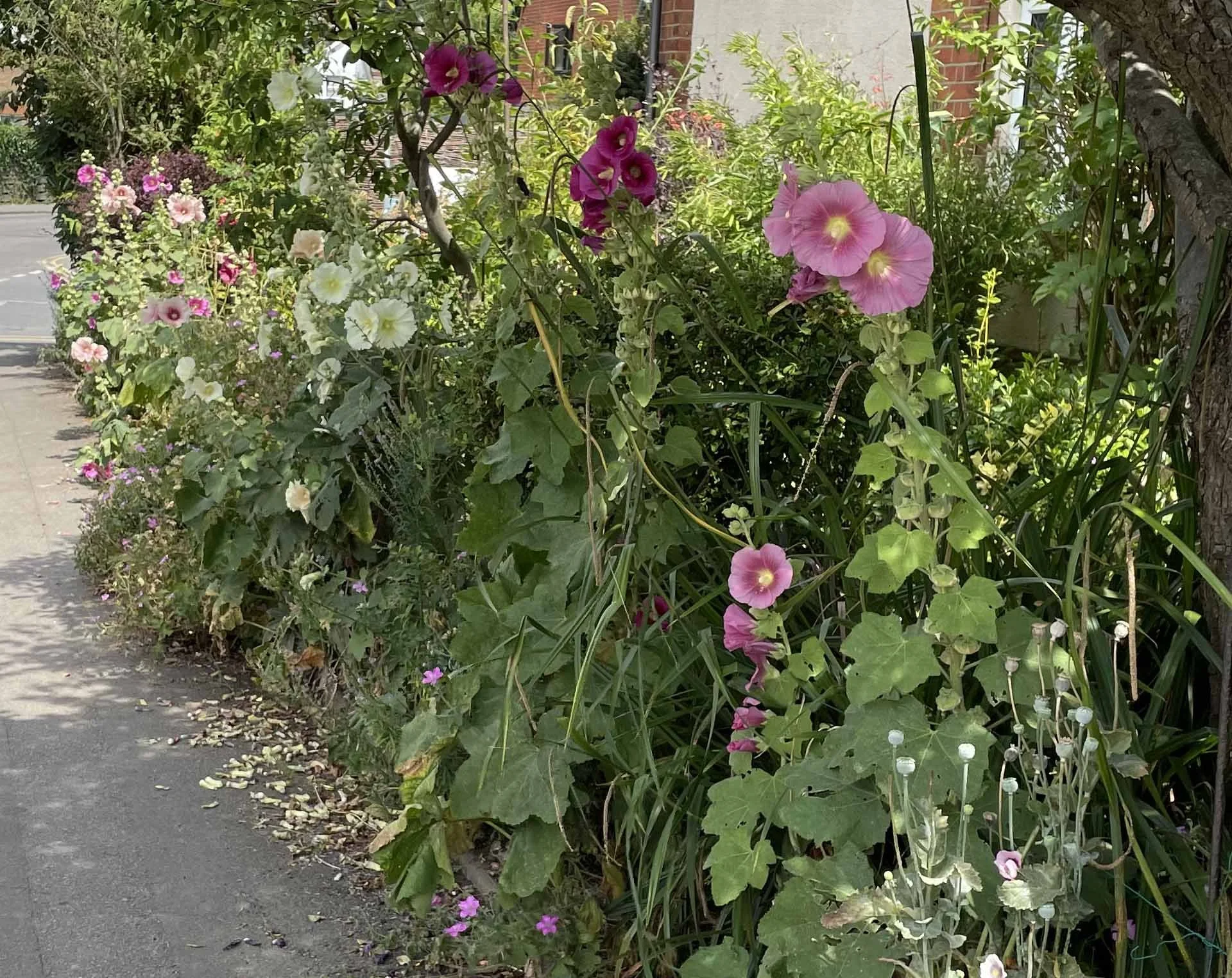
A range of hollyhocks, flowers and grasses provide a nature friendly informal hedge
Of course many gardeners do not want a completely unruly garden – or even the odd unruly bed! The choice is ours. We can be ‘masters’ of our gardens, keeping nature at bay or we can select plants that require less intervention on our part, accommodating the ebb and flow of the natural world. Gardens are, after all, a transition zone between our home interiors (order) and the natural world (disorder). It is up to us how we bridge this divide. In the garden shown in the above photo, different coloured hollyhocks provide a fantastic and long-lasting colourful display – an informal hedgerow concealing the narrow front garden. They actually grow directly out of cracks in the tarmac along the roadside! The hollyhocks are backed by some evergreen woody shrubs for privacy and there are small trees too, providing a lowish upper canopy. The bones of the garden have been curated by the owner. Amongst these structural plants, smaller flowers, wildflowers and grasses have been allowed to fill in the gaps in an uncurated way. They bulk out the lower storey, creating a biodiversity-rich linear border that looks very beautiful too. It still needs a bit of tending to keep some of the plants in check, but overall the appearance can be very forgiving – no straight lines and manicured edges to be maintained. If you don’t mind things looking a bit scruffy at times, do less and get more!
Happy garden rewilding, from SeeHow!
To buy SeeHow’s unique Flower and Vegetable Gardening Books, go to our online shop - www.seehow.co.uk/shop
The above Text and all Photographs are copyright of Wincenty (Wicek) Sosna. Please contact SeeHow (07939 226417) for permission to reproduce in any way, in part or as the complete text.
Wicek, now semi-retired, is a multi-award-winning architect. He is also a writer, horticulturalist and keen gardener. He lives in Macduff on the dramatic north Aberdeenshire coast. He invented the unique interactive SeeHow gardening book concept, to actually show gardeners how plants and veg grow throughout the calendar-year. Because SeeHow books work visually, anyone can use them - from school children to garden design professionals. Pictures really are worth 1,000 words!
Exciting Opportunity!
SeeHow is looking for investors / crowdfunders to help it grow – specifically to develop the SeeHow App.
Please spread the word to friends and colleagues you think may be interested. For anyone who would like to know more about becoming part of the SeeHow adventure, please contact Wicek Sosna on +44 (0) 7939 226417