
Your Future-Self Will Thank You - Part 1
The Uk’s food security is based on a complex web of trading agreements made with countries around the world. But these supply chains are fragile and under increasing threat from global political instability and the effects of climate change. Today’s norms may not be the norms of tomorrow! We may have to become more self-reliant, eating more home-grown seasonal produce. So, with this in mind, here are a few vegetables that can we grow at home to keep us fed, full, healthy and happy throughout the year – especially the colder months when other veg may be in short supply … but you need to start planning for them now! (see SeeHow – Veg for more ideas www.seehow.co.uk/shop
1 Jerusalem Artichokes - Helianthus tuberosus
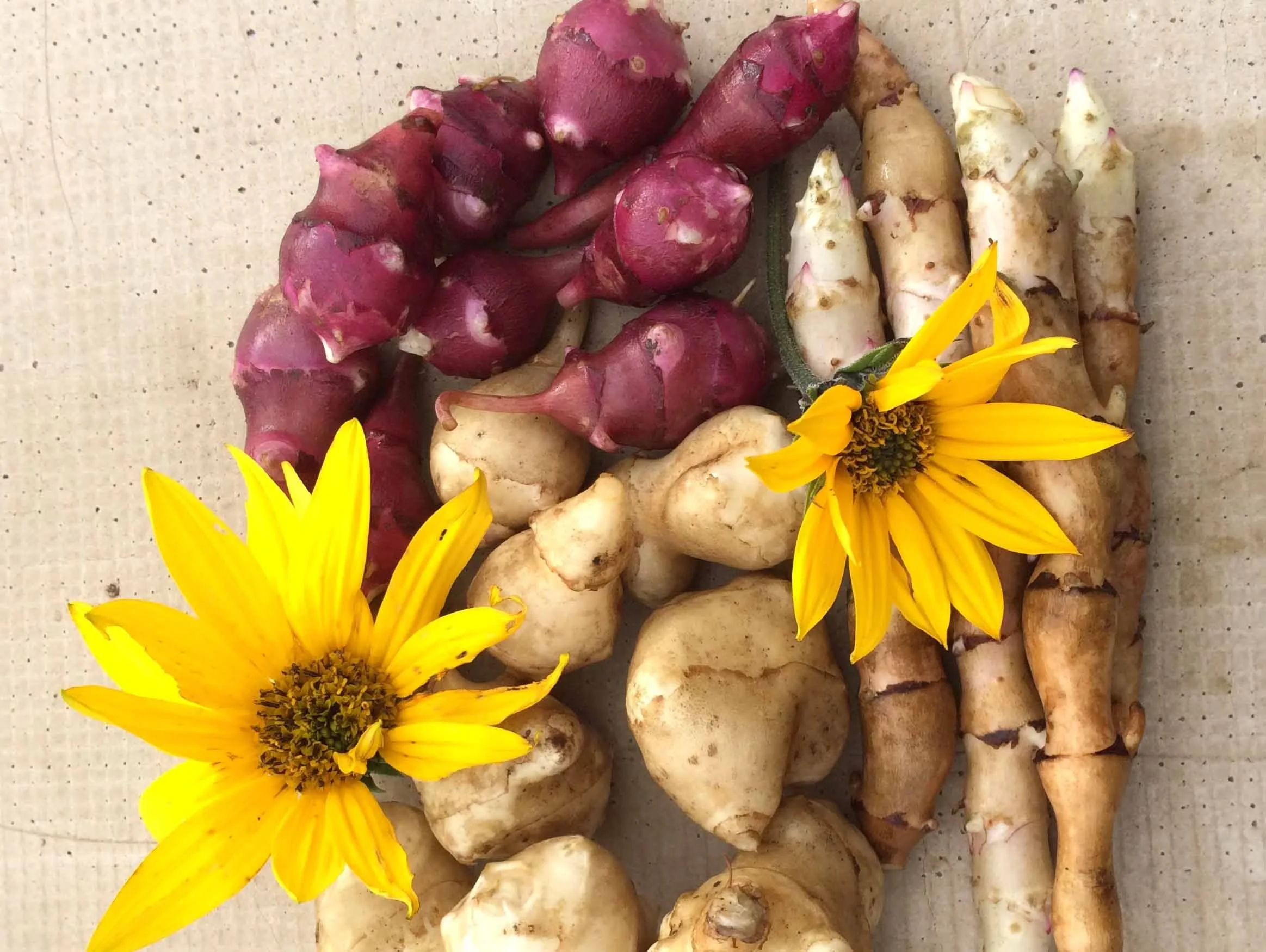
Free-source photo. Jerusalem Artichoke tubers can be different colours, sizes and shapes depending on the variety. An old toothbrush is useful for cleaning the soil from the knobbly surfaces. Check out SeeHow – Veg www.seehow.co.uk for planting and harvesting details.
Despite the name, Jerusalem Artichokes are not from Jerusalem and they are not artichokes! The plant is a type of sunflower from North America, where it is also known as a ‘sunchoke’. It is grown for its edible tubers. It is now commonly grown around the world and is eaten in many ways, often as an alternative to potatoes. Sunchokes can be very tall plants growing to 2m or more, with attractive bright yellow flowers and may need support in areas prone to strong gusty winds. Being tall, they can also cause over-shadowing, affecting the choice of crops grown in adjacent shaded beds. So it is worth checking the movement of the sun before selecting where to plant them. Each healthy sunchoke should produce a cluster of knobbly tubers, which can be cream, pink or red in skin colour. Harvest after the green part of the plant has died back and preferably after the first frosts – October / November onwards – as they benefit from ‘cold sweetening’ during which the starch called inulin is converted to fructose. They can be left in the ground through winter, using the soil as a natural storage medium and harvested as required. Save some healthy tubers to replant in early spring for the following year’s crop – and so on, for a perennial supply.
Culinary tips – A source of winter carbs; an alternative to potatoes in many dishes. Apparently, it may help to lower blood sugar, so may benefit diabetics. The tubers can be grated and eaten raw in salads (unlike potatoes), made into soups, roasted, or boiled and mashed. They are generally smaller than potatoes and a little more fiddly to prepare.
2 Oca – Oxalis tuberosa
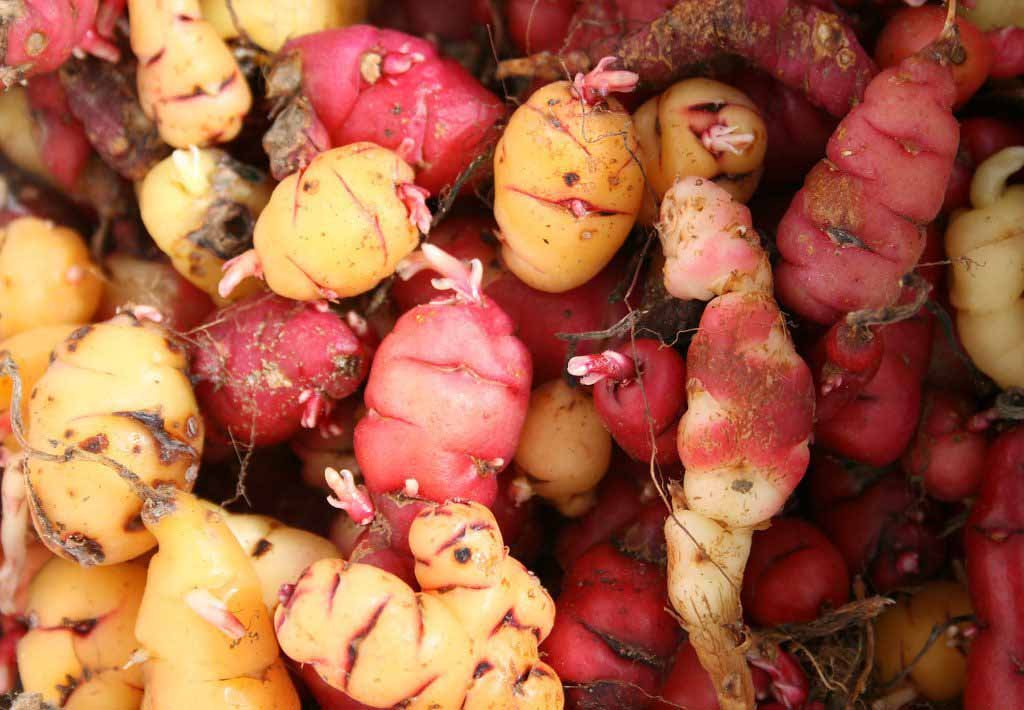
Free-source photo. Once cleaned, Oca look a bit like small Jerusalem Artichokes.
Oca is a perennial root veg that is gaining in popularity. It originates in south America, from the Andes, where it grows on the mountain slopes in the cooler air – so it is well-suited to milder climates (should grow well in Scotland). It is now becoming popular around the world and is commercially cultivated in New Zealand, known as the ‘New Zealand Yam’ (it is not a relative of the true yam). It comes in a variety of colours – yellow, pink and red. As a vegetable, it looks similar to Jerusalem Artichokes but the tubers are smaller. It is harvested in the same way, from around October onwards, after the stalks have completely withered. Oca does not benefit from ‘cold-sweetening’ and should be protected from the frost by a mulch if left in the ground during the cold weather. To store, lift all of the tubers and carefully clean – do not wash. Avoid damaging the thin skins. Once clean, leave to ‘cure’ for 10 days or so. Select the healthy ones and store in a dark place – temperature 2C-4C. Set some tubers aside each year to plant for a perennial supply.
Culinary tips – a source of winter carbs. Harvest from around October onwards. An old toothbrush can be useful to thoroughly clean. Oca can be eaten raw in salads, roasted, cooked in stir-fries, boiled and mashed.
3 Skirret - Sium sisarum
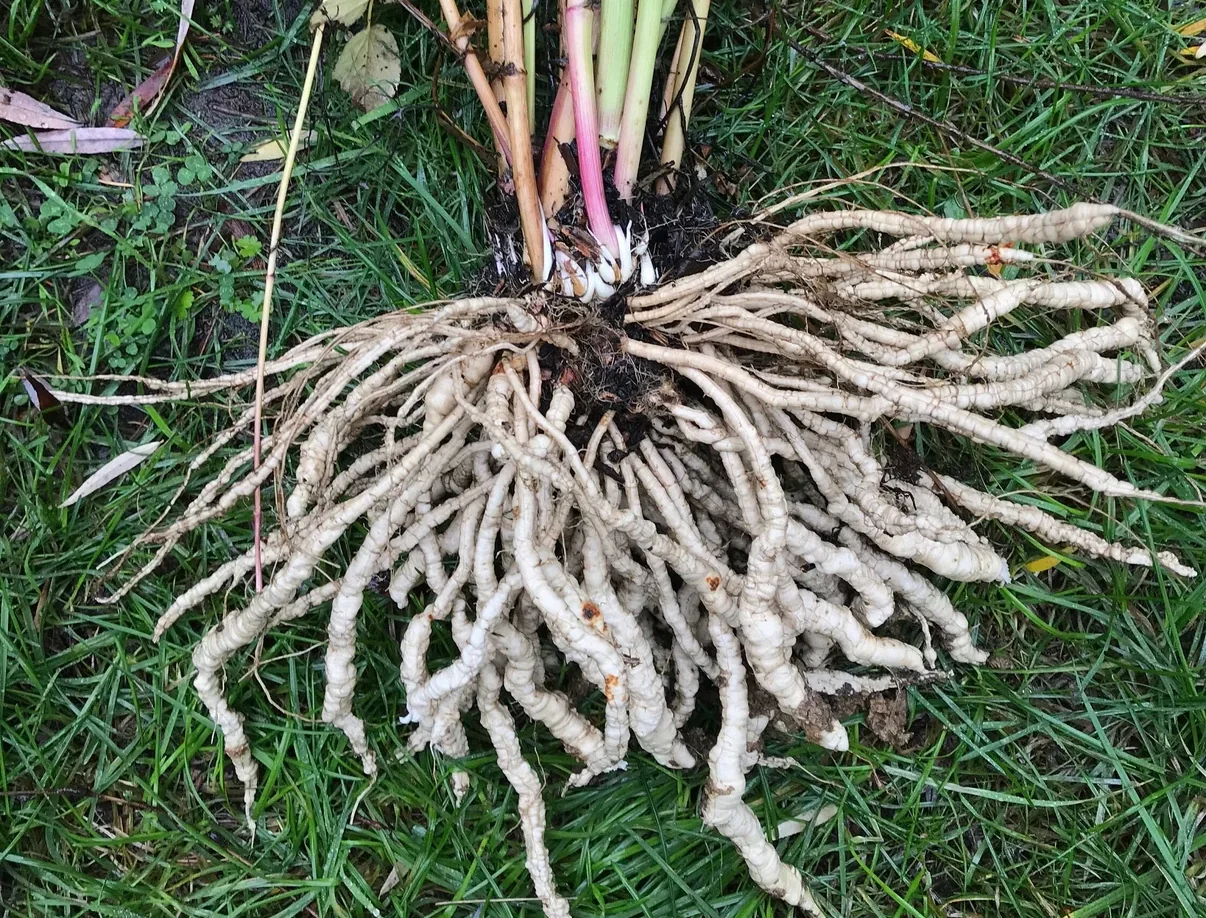
Free-source photo. The once-popular skirret is making a well-deserved comeback. The photo shows a whole skirret plant harvested and washed. The pink offshoots can be carefully removed and replanted to provide next year’s harvest. Pieces of root left in the ground may also regrow.
Encyclopaedia’s record that Skirret arrived in Europe from China in the 11th century. It was cultivated for its edible roots and eventually became a household staple across Europe in the time before potatoes. As a result it has many names in different countries. It belongs to the parsley family, along with carrots, celery and dill. It has white umbellifer flowers that are good for biodiversity. Its flavour is similar to carrot but with a slightly peppery aftertaste. Although widely grown during Tudor times, it is was almost completely displaced by the arrival of potatoes in the 16th century – potatoes being better cropping and easier to grow, clean and cook – to the extent that most people today have not heard of it. The plant is a true perennial in that it will grow year-after-year if undisturbed and will regrow if even small pieces are left in the ground after harvest. However, if left in the ground, the hearts of the roots may become woody. It is better to lift the whole plant annually, remove the pink offsets and replant these for the following year’s harvest. Follow this process each year for a perennial supply.
Culinary tips – A sweet root and source of winter carbs. Enjoy skirret from October through to the following March. Use like any root veg - grate raw into a salad or simply eat raw. Otherwise, treat as a carrot - stir-fry, roast, boil, cream for hummus alternative.
4 Chinese Artichoke – Stachys affinis
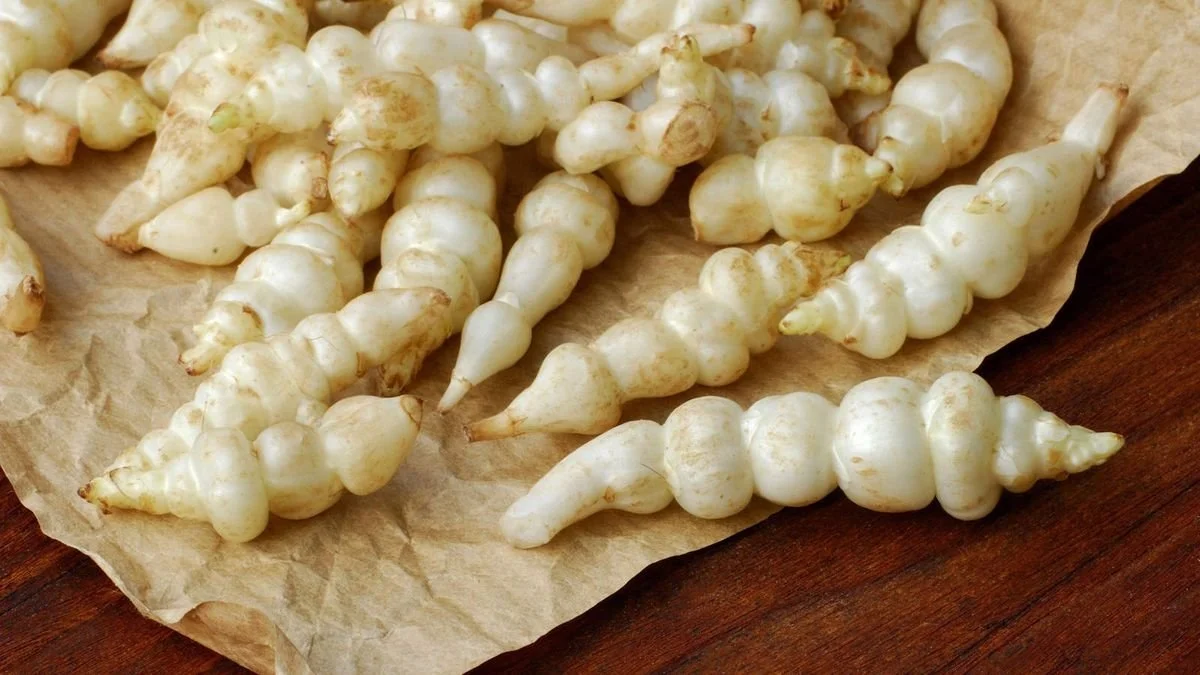
Free-source photo. Chinese artichokes grow approximately 1 to 2 cm in width and 10cm long. An old toothbrush can help with cleaning.
Chinese artichokes are perennial plants producing small, knobbly tubercles that are typically white and have a mild, nutty flavour reminiscent of water chestnuts. The plant can grow up to 120 cm tall and features rough, nettle-like leaves and red to purple flowers that attract biodiversity. They prefer full sun and need to be kept fed and watered. Each plant will normally yield 20 to 30 reasonably sized tubercles during harvest, from November right through winter. Harvest just what you need as the tubercles do not store well. Some healthy tubercles can be saved and replanted to produce the following year’s plant, so ensuring a perennial supply. Plant tubers about 350mm apart in early spring after the last frosts.
Culinary tips – A source of winter carbs. Harvest from November through to following March, harvesting one plant at a time. Cooking suggestions - boiling, sauteing, roasting, steaming, soups, stir-fries, are all suggested methods for cooking this root, to enjoy its mild flavour.
5 Horseradish - Armoracia rusticana
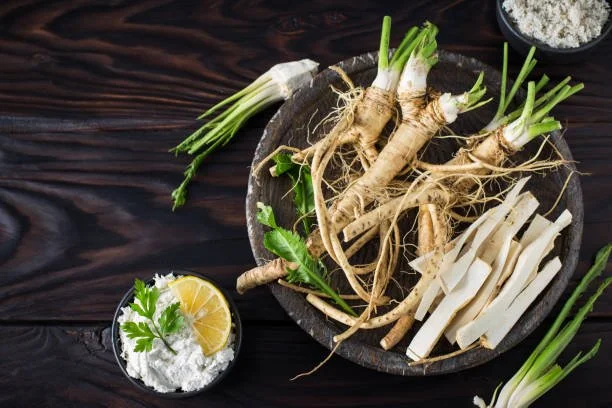
Free-source photo - shows freshly gathered roots, some peeled roots and some prepared for grating. Horseradish sauce is a versatile accompaniment to meat and vegetarian dishes. The young leaves make a tasty addition to fresh salads. Check out SeeHow – Veg www.seehow.co.uk for planting and harvesting details.
Horseradishes are found throughout the world. They can become invasive so growing in a container is an option. They like full sun or partial shade with moist but well-drained soil. They are fully hardy herbaceous perennials, which means the green part of the plant dies completely in winter, to re-emerge in spring. It can be grown from seeds but this method will take longer to reach harvestable size than starting with pieces of the root, called ‘thongs’ or from pot-grown plants. It is recommended to only begin to harvest the root from the second year of growing. The young leaves can also be used in salads and have a mild peppery flavour. Horseradishes are ready to harvest in late autumn or early winter. A portion of the plant is dug up and the roots harvested, leaving the remaining part insitu for later harvesting, ensuring a perennial supply.
Culinary tips – use young leaves in salads or use the root as a condiment. Wash and peel the roots. The aroma released can be very pungent, affecting the eyes (like raw onions), so best prepare it in a well-ventilated space. Use for sauces, home-made mustards and pickles to accompany meat and fish dishes. Can be very sharp, like wasabi.
6 Potatoes - Solanum tuberosum
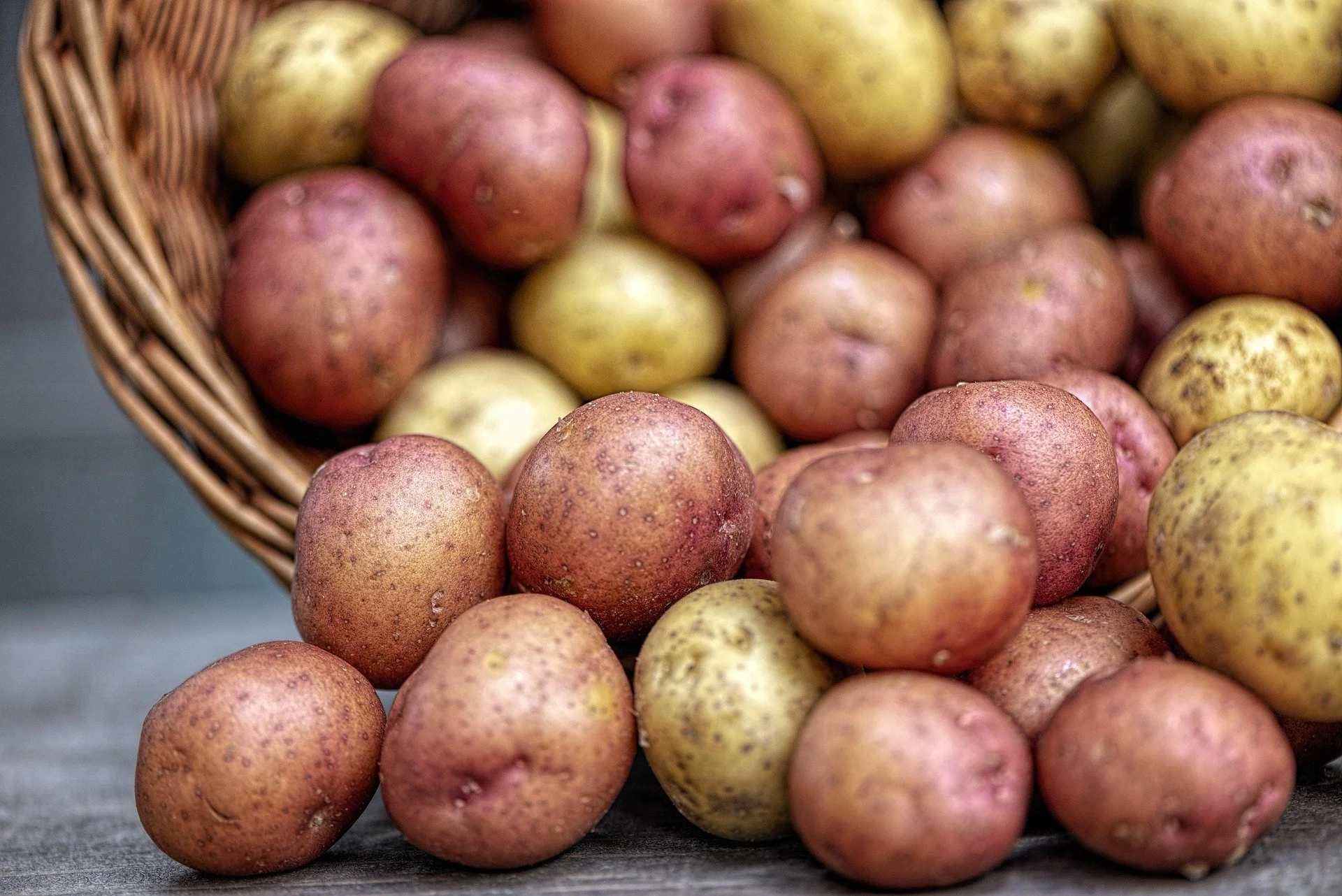
Free-source Photo Stanbalik - Generally easy to grow, potatoes come in a variety of shapes and sizes and can provide a good return in terms of quantity for effort. Check out SeeHow – Veg www.seehow.co.uk for planting and harvesting details.
Potatoes are apparently the most commonly grown root veg in the world and it is estimated that there are now over 4,000 varieties. Although potatoes are perennial, we mostly grow them as annuals. They are classified as ‘Earlies, Second Earlies and Maincrops’, harvested from June to October and can be stored to last through winter making them an important winter food source. Potatoes can be ‘determinate’ or ‘indeterminate’ (just like tomatoes). Choose determinate varieties for planting in the ground if you have a plot and consider using indeterminate varieties if using growbags. Indeterminate varieties can be continuously earthed-up as the main stems grow upwards like a vine. The earthed-up stems sprout additional side shoots (stolons) as they grow vertically. These swell to create layers of potatoes. This can be a good way to get more potatoes from a small area – growing on balcony or terrace. Keeping the compost moist and well-fed is essential to encourage good cropping.
Culinary tips – a good source of carbs. Different potatoes can have different characteristics when cooked and can be eaten in a wide variety of ways (but not raw). In fact, there are books dedicated to cooking this one vegetable!
Growing any of the above selection of root vegetables requires planning right at the start of the planting year, as they take the whole growing season to mature and can occupy a sizable area. However, while they are growing during spring and early summer, it may be possible to grow other faster-growing crops between the rows. For instance, lettuces can be grown between potato plants. They are worth the wait as they make a hearty, healthy and sharp (horseradish) contribution to the winter kitchen table. With each one, it is possible to save some tubers, offsets, roots or rhizomes, to replant for future cropping. So once established in your garden, they can provide a perennial supply. You future-selves will thank you!
Happy winter harvesting, from SeeHow
The above Text is copyright of Wincenty (Wicek) Sosna. Please contact SeeHow (07939 226417) for permission to reproduce in any way, in part or as the complete text.
Wicek, now semi-retired, is a multi-award-winning architect. He is also a writer, horticulturalist and keen gardener. He lives in Macduff on the dramatic north Aberdeenshire coast. He invented the unique interactive SeeHow - Gardening Books concept, to actually show how plants and veg grow throughout the calendar-year. Because SeeHow books work visually, anyone can use them - from school children to garden design professionals. Pictures really are worth 1,000 words!
To buy SeeHow’s unique Flower and Vegetable Gardening Books, go to our online shop - www.seehow.co.uk/shop
Exciting Opportunity!
SeeHow is looking for investors / crowdfunders to help it grow – specifically to develop the SeeHow App.
Please spread the word to friends and colleagues you think may be interested. For anyone who would like to know more about becoming part of the SeeHow adventure, please contact Wicek Sosna on +44 (0) 7939 226417