
Your Future-Self Will Thank You - Part 2
My last blog, ‘Your Future Self Will Thank You - Part 1’, looked at some perennial root veg to grow, to help us get through the long winter months well-fed, healthy and happy. But many factors can affect the global and local food supply chains. We may find ourselves unexpectedly short of vegetables that we take for granted will always be on the supermarket shelf. It is therefore a bit of a no-brainer for us to become more self-reliant, adjusting our eating habits to incorporate home-grown seasonal produce. So it is great to know that ‘home-grown’ still means a wide and tasty choice of nutritious fruit and veg (See SeeHow – Veg www.seehow.co.uk/shop ). By incorporating successional planting and by eating seasonally, it is possible to maintain a healthy harvest all the year. If you are lucky-enough to have a greenhouse, a polytunnel - even a sunny window cill – your veggie choices may be even greater! With this in mind, I thought I’d pick up where my previous blog finished and mention a few more tasty and tummy-filling veg that can make hearty and healthy contributions to the kitchen table over a long period.
1 Carrots - Daucus carota
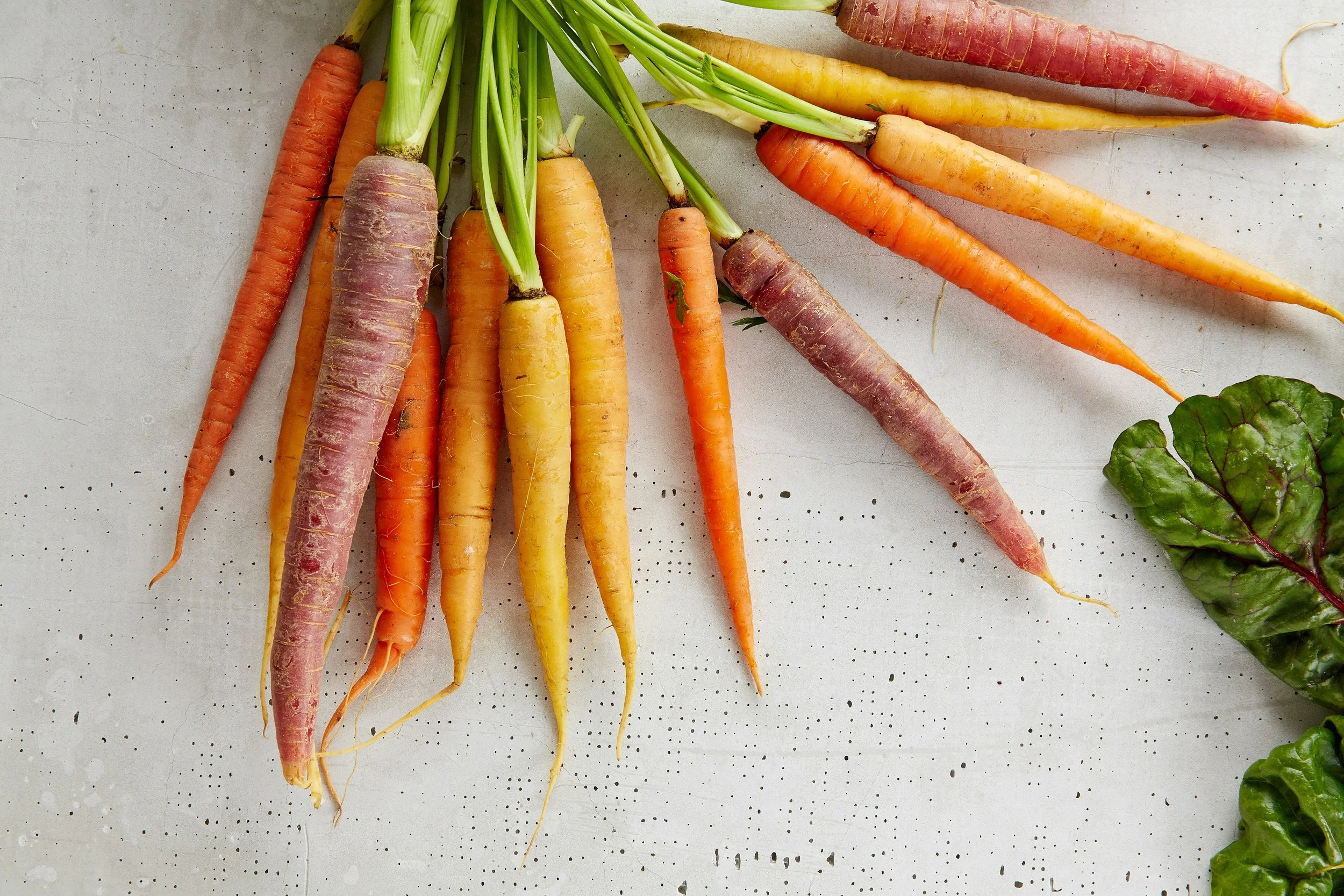
Credit - Photo by Gabriel Gurrola on Unsplash
Carrots are easy to grow (check out SeeHow- Veg’s carrot growing guides www.seehow.co.uk ). There are many varieties from which to choose, from short and stout to long and slender, so for best results, select ones suited to your soil type and depth. There are heirloom varieties too, in different colours – purple, white, yellow and red, to add a rainbow touch to your salad bowl. Baby carrots can be harvested in as little as 4 weeks providing small tasty sweet treats, while larger carrots take around 12 weeks. As carrots grow quickly, they can be planted for fresh successional harvesting every 4 weeks. With this in mind, it is possible to be harvesting carrots from early summer to late winter – in effect, all year. The first crop can be grown between slower-growing crops such as potatoes or parsnips.
Culinary tips – Eat raw for best nutritional intake, as this preserves vitamin C and antioxidants – sliced or shredded, paired with hummus, raisins, nuts, salad leaves, are delicious options. They can be roasted and glazed; made into soups; added to stews; baked as carrot cake and cookies or turned into smoothies. They are a sweet super-versatile and nutritious root vegetable. Carrot tops can also be eaten and contain vitamins A, C and K and minerals potassium and iron. Add to salads or use in soups and pesto.
2 Beetroot – Beta vulgaris

Credit - Photo by Emma-Jane Hobden on Unsplash
Beetroot are easy to grow, but do need a reasonably sunny site receiving 4 to 6 hours of sunlight daily. They prefer loose, well-drained soil. Raised beds can help by improving drainage. They can also be grown in suitable containers, which can be moved for best sunlight. As with all veg, ensure that the soil has been enriched with compost in advance of planting. Beetroot come in a variety of colours – white, orange and red and may be round or cylindrical in shape. They are best sown directly into the growing medium to avoid root disturbance (see SeeHow Veg – growing guides www.seehow.co.uk ) normally in the UK from late March to mid-April, depending on your microclimate. They take from 9 to 12 weeks from sowing to harvest. If planted successionally, from spring to mid-summer, they can provide a continuous harvest from early summer to Autumn. They can become ‘woody’ if left to grow too large.
Culinary tips – Beetroots have a sweet earthy taste and are packed with vitamins, minerals and other beneficial compounds. For the sweetest flavour and best texture, they should be harvested when golf ball size. The young leaves can be added raw to the salad bowl and more mature leaves wilted and eaten like spinach. Suggested uses include raw beetroot salad; pickled beetroot; beetroot soups and drinks; roasted beetroot; beetroot as an accompaniment to meat dishes; beetroot hummus; beetroot curry; beetroot chocolate cake.
3 Parsnip - Pastinaca sativa
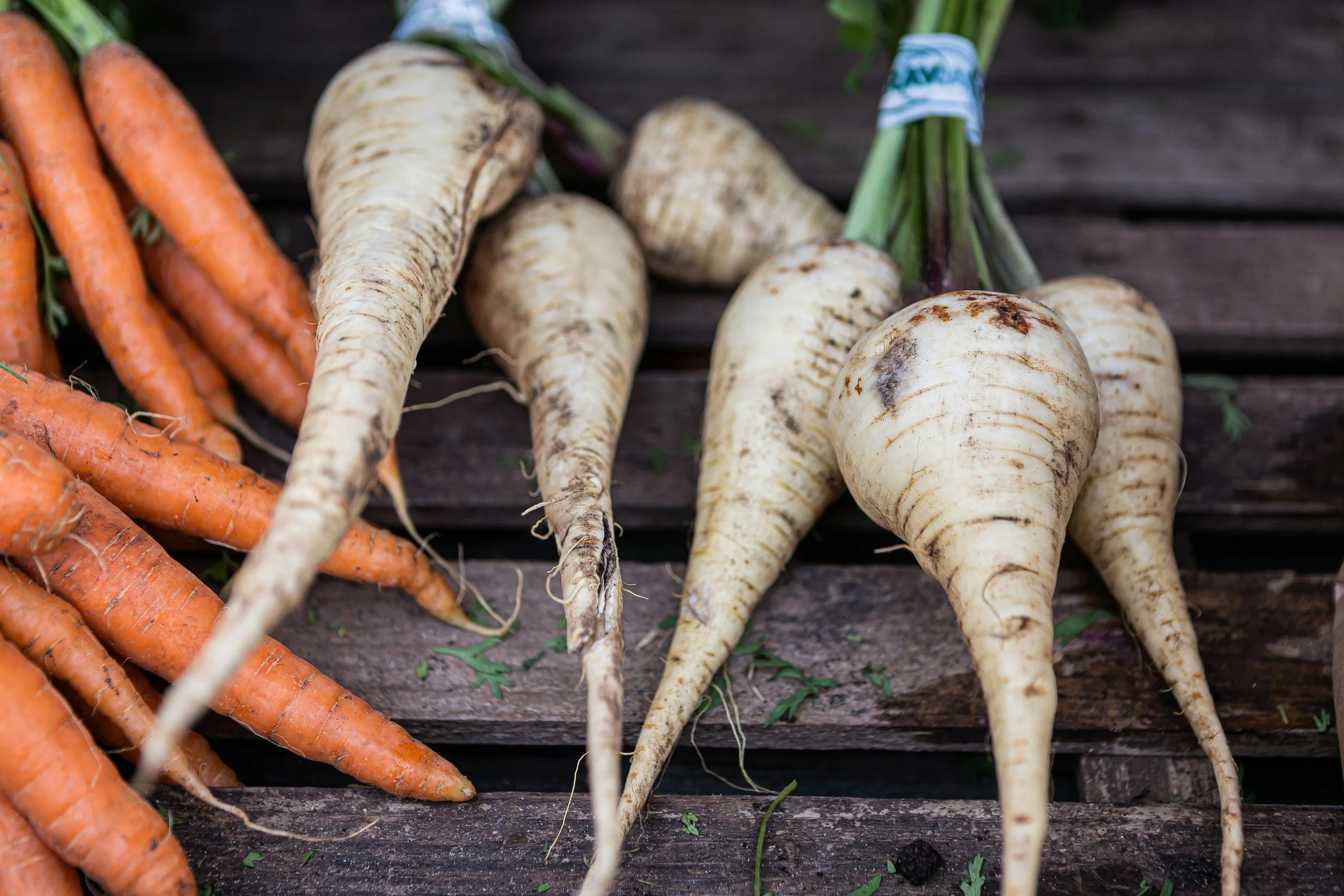
Credit – Photo by Carl Tronders on Unsplash
Sow parsnips March to May (once the soil temperature has reach 10 to 12C) for a delicious harvest from September through winter to the next March. Seedlings may take from 2 to 4 weeks to appear. They need little maintenance and can be left in the ground and only lifted as required, ensuring a harvest during the coldest months. They benefit from the cold weather which turns root starches into sugars, primarily sucrose (a natural antifreeze), improving sweetness. Use fresh seed as older seeds loose viability quite quickly and sow directly into the bed. Rows should be 450mm to 600mm apart so faster growing successional crops can make use of the space in between the rows during the early stages of growth. The process of watering and harvesting the successional crops will help to keep the soil surface broken, maintaining better drainage. If sowing carrots as well, keep the two crops apart to reduce the risk of carrot fly damage.
Culinary tips – The flavour of parsnips is described as ‘slightly sweet and nutty’. It has a starchy texture, similar to carrots when cooked. Parsnips can be eaten in many ways. Roasting is one common method and there are numerous recipes online, mixing parsnips with many other ingredients for a wide range of main and side dishes. They can added to hearty winter stews. Some alternative uses include parsnip soup; parsnip risotto; savoury rösti pancakes; parsnip gnocchi; parsnip cake and tarte tatin.
4 Sweet Potatoes - Ipomoea batatas
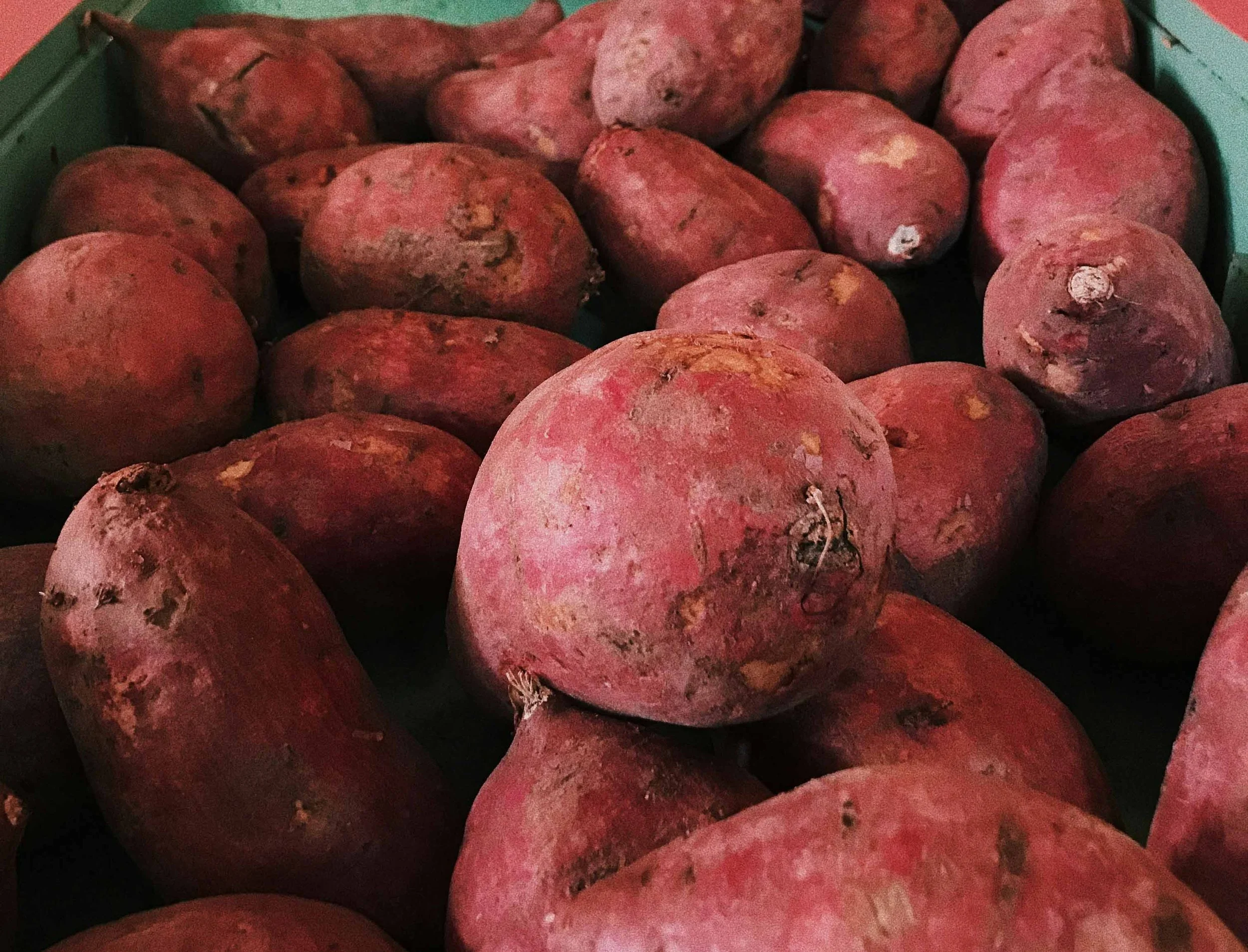
Despite the name, sweet potatoes are not related to potatoes and they are not yams. The edible tuberous roots may be beige, yellow, pink, red, violet, purple, brown. The cultivars with pale or yellow flesh are less sweet than those with pink, orange or red flesh. Sweet potatoes are herbaceous perennials, but they are tender and can die in cooler climates. For this reason they are generally treated as annuals and grown anew each year. In cooler climates, if planting outdoors, they should be planted after the risk of frost has passed. Choose somewhere warm and sunny. Using a greenhouse or polytunnel will improve the chances of a useful crop. They need a minimum of 6 to 8 hours of sun each day and prefer well-drained sandy loam soil enriched with organic matter. They can be bought from garden centres, which will guarantee the variety. But it is also possible to use supermarket-bought potatoes from varieties you enjoy eating. You can grow ‘slips’ from these, which can be planted once they develop roots. They take 90 to 120 days to reach maturity and can be harvested once the foliage has died back – normally from August onwards. Remove the tubers before the first frost, which can cause damage. After harvest, leave to dry for a few hours then move to a warm place to ‘cure’ for about 10 days before eating. This improves storage life and taste. The curing process converts starches to sugars which can extend storage life through winter.
Culinary tips – Sweet potatoes are very versatile vegetables. They can be used in both sweet and savoury dishes. They can be baked, fried, mashed, added to casseroles, curries and soups and even made into houmous. They are considered one of the most nutrient-dense root vegetables available.
5 Garlic - Allium sativum
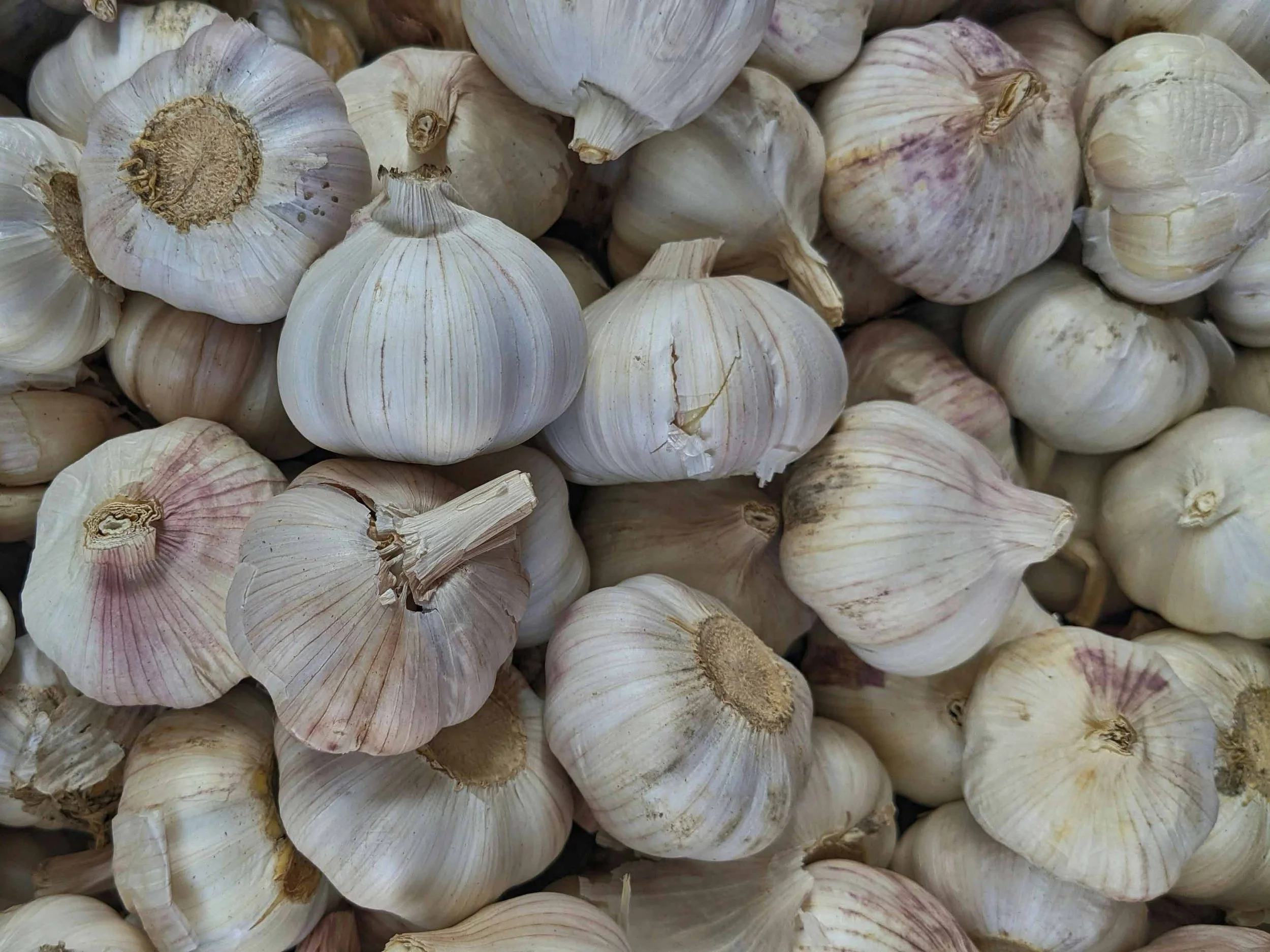
Credit – Photo by Farah Alabbouchi on Unsplash
As with the other vegetables described above, growing garlic is regarded as easy, simply requiring well drained soil and plenty of sunlight. There are two main types – hardneck and softneck. Hardneck varieties are better suited to colder climates and produce fewer, larger cloves with a stringer flavour. They store for 4 to 6 months. Softneck varieties produce more tightly packed cloves that store well. If planted in early spring, after harvest they will store right through winter until the next year’s crop become available. Buying bulbs from a nursery should mean they are disease free and you will know what variety you are growing. Best avoid planting supermarket cloves as this may mean importing disease. Plant individual cloves in autumn (they benefit from a period of cold weather) for harvesting in late spring / early summer – approximately 7 to 8 months. Alternatively, plant in late winter / early spring, for harvesting in mid-to-late summer. They store well after being lifted and left to dry, so should provide a kitchen vegetable throughout the year. For a bit of fun, Elephant garlic (Allium ampeloprasum) is also an option – it is actually a relative of leeks. It needs a long warm growing season and may not actually subdivide into cloves, producing a large single bulb with a mild flavour.
Culinary tips – is a staple of Mediterranean cooking and is now widely used throughout the UK. It has a wide range of uses but does have a strong flavour that can overpower dishes masking other flavour. For best flavour, smash or crush the clove before adding to a dish. To reduce the flavour, slice in half lengthways and remove the coloured green / yellow stem. They can be sautéed, or roasted whole with meats and fish. Blitz with chickpeas / carrots / parsnips / broad beans etc, cumin, olive oil, salt and lemon juice for delicious variations on homemade hummus.
6 Radishes – Raphanus sativus
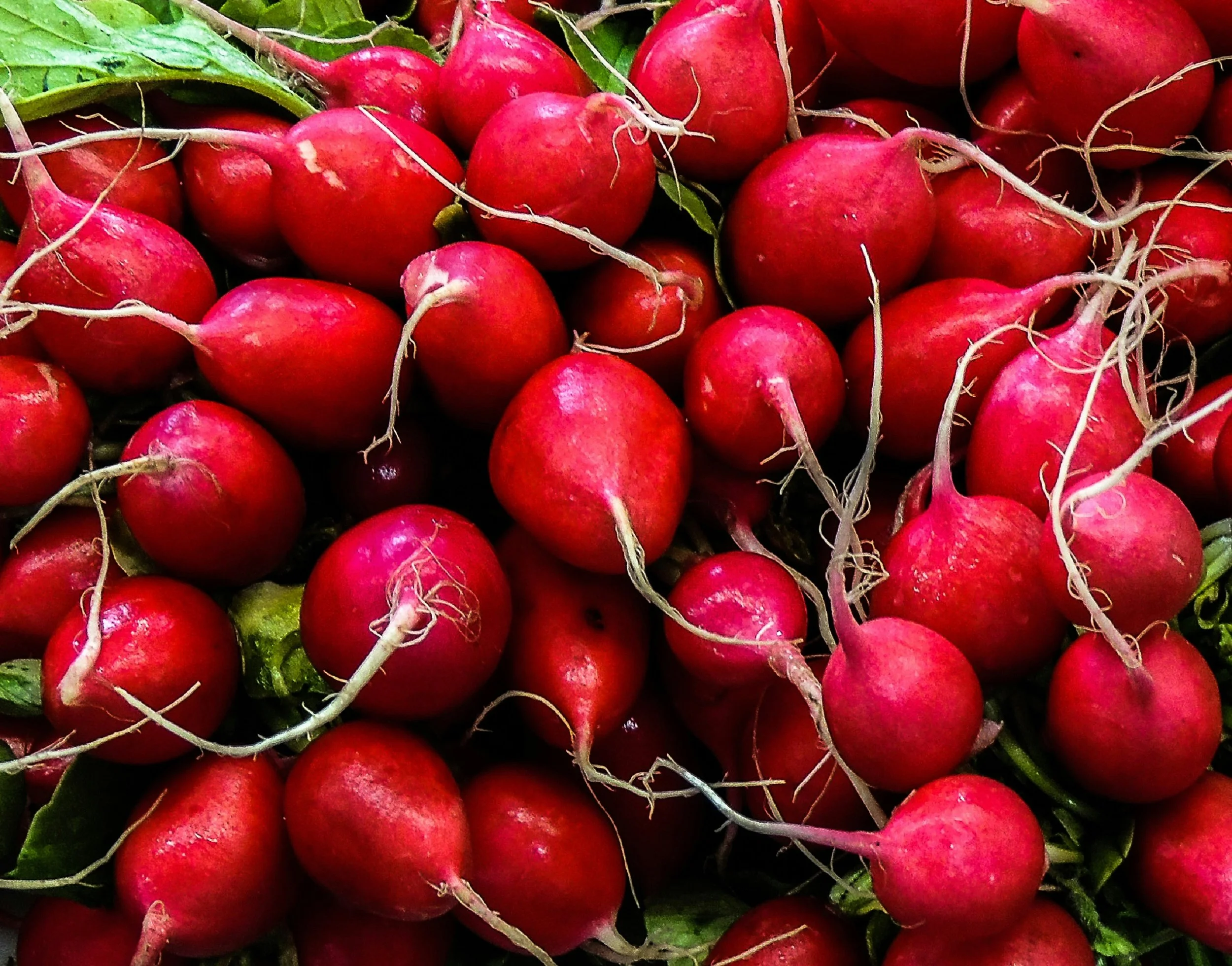
Credit – Photo by Philippe Collard on Unsplash
Radishes are an easy-to-grow crop that thrive in cooler weather. Direct seeding is recommended as they do not transplant well. Salad radishes crop quickly – 3 to 4 weeks from planting for the common round red varieties, so sow fresh seed every few weeks for a regular harvest. Other varieties can take longer to mature – up to 10 weeks. There are many varieties to choose from – white, red and purple types may be round or cylindrical; Daikon, which are white and more carrot-shaped; watermelon radishes which are large and colourful with a mild flavour; Black Spanish radishes which, depending on variety will grow from 7 to 20cm in length, are sharply flavoured and available to harvest throughout winter (See SeeHow -Veg). All radishes can become a bit woody if left in the ground too long. Once picked and cleaned, they can store for up to 2 weeks in a fridge.
Culinary tips – Radishes form rounded or long roots that are succulent and crunchy, with different levels of pepperiness. Some varieties can be very sharp so slice thinly when adding to a salad mix. Eat raw with hummus, cottage cheese, harder cheeses and cold meats. They can also be added to the roasting tray, tossing with olive oil, herbs and seasoning that will pair with most meals. They can be grated and pureed and also be pickled and preserved as a long-term storage option.
Harvesting vegetable roots means disturbing the soil, affecting all the microbial and other life that lives there. We should try to minimise this impact and gently firm the soil back into place after the root is removed.
Happy harvesting, from SeeHow.
To buy SeeHow’s unique Flower and Vegetable Gardening Books, go to our online shop - www.seehow.co.uk/shop
The above Text is copyright of Wincenty (Wicek) Sosna. Please contact SeeHow (07939 226417) for permission to reproduce in any way, in part or as the complete text.
Wicek, now semi-retired, is a multi-award-winning architect. He is also a writer, horticulturalist and keen gardener. He lives in Macduff on the dramatic north Aberdeenshire coast. He invented the unique interactive SeeHow - Gardening Books concept, to actually show how plants and veg grow throughout the calendar-year. Because SeeHow books work visually, anyone can use them - from school children to garden design professionals. Pictures really are worth 1,000 words!
Exciting Opportunity!
SeeHow is looking for investors / crowdfunders to help it grow – specifically to develop the SeeHow App.
Please spread the word to friends and colleagues you think may be interested. For anyone who would like to know more about becoming part of the SeeHow adventure, please contact Wicek Sosna on +44 (0) 7939 226417